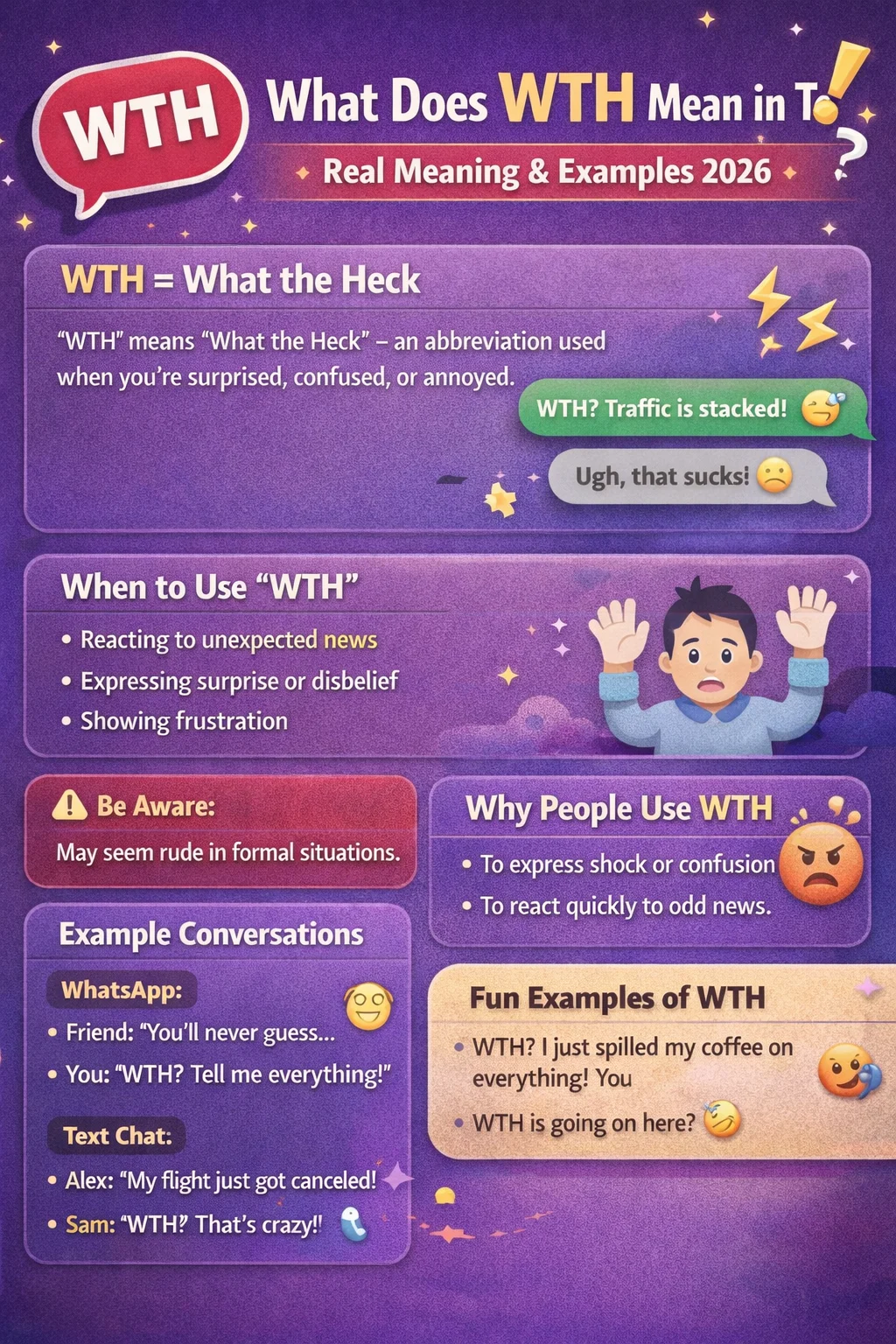
If you’ve ever been scrolling through messages or social media and suddenly saw “WTH,” you’re not alone in wondering what it means.
At first glance, it can feel confusing—especially if you’re not used to internet slang. But the truth is, “WTH” is one of those short expressions people use all the time to react quickly, show emotion, or respond without typing a full sentence.
In this guide, I’ll break it down in a simple, human way—no complicated explanations, no robotic tone. Just clear meaning, real examples, and how people actually use it in daily conversations.
What Does WTH Mean?
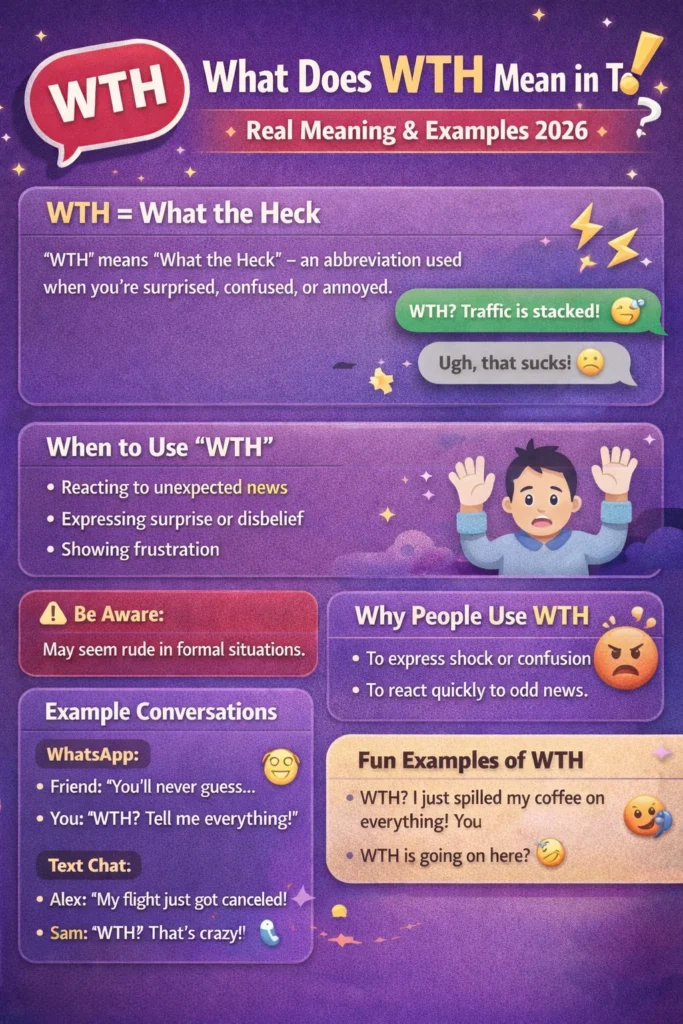
“WTH” stands for:
👉 “What The Hell”
It’s a short way to express:
- Surprise
- Confusion
- Frustration
- Disbelief
Instead of typing the full phrase, people just use “WTH” to react quickly.
Simple Example:
- “WTH just happened?”
- “WTH are you talking about?”
It’s basically your brain going: “Wait… what?!”
Why Do People Use “WTH” Instead of the Full Phrase?
Let’s be honest—online conversations are fast.
Nobody wants to type long sentences when a quick reaction does the job.
“WTH” is popular because:
- It saves time
- It feels casual
- It’s less harsh than saying the full phrase
- It fits texting culture perfectly
Also, some people prefer it because it softens the tone. Writing “What the hell” can sound aggressive, but “WTH” feels lighter and less confrontational.
Is “WTH” Rude or Offensive?
This depends on the situation.
👉 In most casual chats, it’s not considered very rude
👉 But in formal settings, it’s still inappropriate
Think of it like this:
- Talking to a friend → Totally fine
- Messaging your boss → Not a good idea
Tone also matters. Sometimes “WTH” is playful, and sometimes it shows real frustration.
Example of playful use:
“WTH 😂 that was actually funny”
Example of frustration:
“WTH is wrong with this app?”
Same words, different feeling.
How “WTH” Is Used in Real Conversations
To understand it better, let’s look at real-life style examples.
1. Reaction to Something Unexpected
“WTH, you already finished the project?”
2. Confusion
“WTH does this even mean?”
3. Mild Anger or Annoyance
“WTH, why is the internet so slow today?”
4. Shock or Surprise
“WTH! That plot twist was insane!”
It works almost like an emotional shortcut.
“WTH” on Social Media
You’ll see “WTH” everywhere—especially on platforms like:
- Instagram comments
- TikTok captions
- Twitter (X) posts
- WhatsApp chats
People use it to react instantly to content.
Example:
Video shows something weird →
Comment: “WTH did I just watch 😭”
It helps people express feelings quickly without overthinking.
Different Meanings Based on Tone
Even though “WTH” always stands for “What The Hell,” its meaning changes depending on tone.
😄 Light / Funny
“WTH 😂 that was actually cute”
😳 Shocked
“WTH… I didn’t expect that”
😡 Annoyed
“WTH is going on here?”
🤔 Confused
“WTH does this button do?”
So it’s less about the words—and more about how you use them.
When You Should NOT Use “WTH”
Even though it’s common, there are situations where it’s better to avoid it.
Avoid using it:
- In professional emails
- In job applications
- With teachers or formal communication
- When talking to someone sensitive
Why?
Because even if it’s mild, it still comes from a phrase that includes “hell,” which can feel disrespectful in formal contexts.
Real-Life Situation Example
Let’s say you’re texting a friend:
Friend: “I just ate pizza with chocolate on it”
You: “WTH?? 😭”
Here, it shows surprise and humor.
Now imagine sending this in a work email:
“WTH is wrong with the report?”
That would come off as unprofessional and possibly rude.
Same phrase—completely different impact.
Why Slang Like “WTH” Exists
Language evolves, especially online.
People naturally shorten phrases to:
- Communicate faster
- Express emotions instantly
- Match the informal tone of digital conversations
“WTH” is part of that evolution.
It’s not about being lazy—it’s about being efficient and expressive at the same time.
Psychological Side: Why We Use It
Interestingly, expressions like “WTH” help release emotion quickly.
Instead of holding in confusion or frustration, you express it instantly.
It acts like a mini emotional outlet:
- Quick reaction
- No long explanation
- Immediate connection with others
That’s why people relate to it so easily.
Common Mistakes People Make
If you’re new to internet slang, here are a few things to avoid:
❌ Using it in serious situations
Example: Responding to someone’s problem with “WTH” can feel insensitive.
❌ Overusing it
If you use it in every sentence, it loses impact.
❌ Misunderstanding tone
Sometimes people think it’s funny, but the other person might take it as rude.
Tips to Use “WTH” Naturally
If you want to sound natural (not forced), keep these tips in mind:
- Use it occasionally, not constantly
- Add emojis to soften tone 😊
- Use it with people you’re comfortable with
- Match the vibe of the conversation
FAQs
1. What does WTH stand for in texting?
It stands for “What The Hell,” used to show surprise, confusion, or frustration.
2. Is WTH bad language?
It’s mild compared to stronger slang, but still not suitable for formal situations.
3. What is the difference between WTH and WTF?
“WTF” is stronger and more offensive, while “WTH” is softer and more acceptable.
4. Can I use WTH in professional messages?
No, it’s better to avoid slang in professional or formal communication.
5. Why do people use WTH online?
Because it’s quick, expressive, and fits casual conversations perfectly.
Final Thoughts
“WTH” might look like just three letters, but it carries a lot of emotion.
It’s a quick, simple way to react when words feel too slow.
Whether you’re surprised, confused, or just reacting to something unexpected, it helps you express yourself instantly—without overthinking.
But like any slang, the key is balance.
Use it in the right place, with the right people, and it becomes a natural part of your everyday communication.
descover more post
What Does bde acronym Mean in Text Real Meaning 2026
What Does what is the meaning of xd Mean in Text Real …
What Does YK Mean in Text Real Meaning Examples 2026

M. Kiro is a passionate writer who enjoys turning everyday questions into clear and meaningful answers. He focuses on creating helpful, honest, and easy-to-read content for people who just want simple explanations without confusion. His work reflects consistency, hard work, and a deep commitment to helping readers understand things better.