
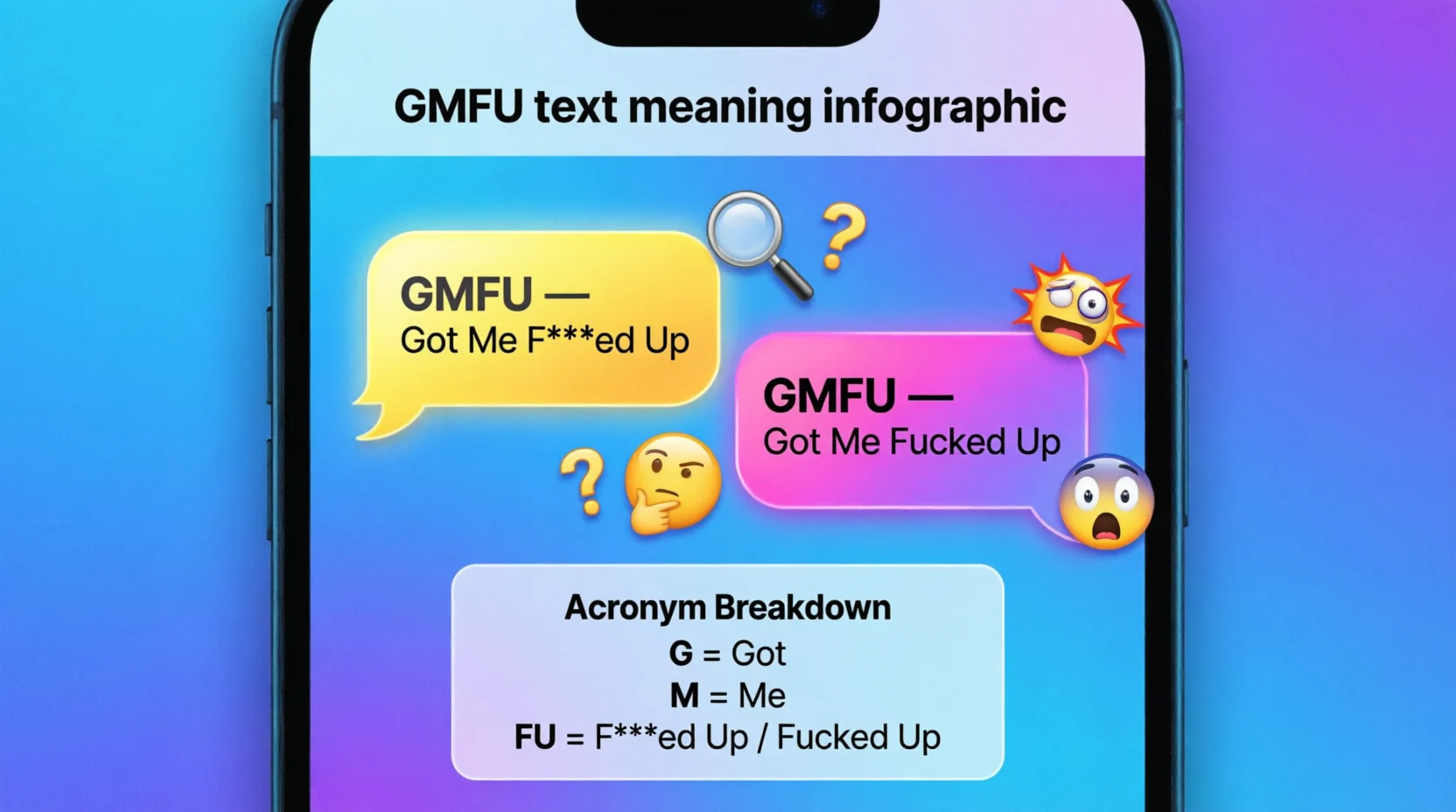
If you spend time on TikTok, Snapchat, Instagram, or texting with friends, you’ve probably seen someone type “GMFU” in a message or caption. At first glance, it can look confusing, especially if you’re not familiar with internet slang.
So, what does GMFU mean in text?
In most online conversations, GMFU stands for “Got Me F*ed Up.”** People use it to express shock, disbelief, frustration, anger, or feeling disrespected. The phrase is usually emotional and dramatic, which is why it became popular on social media.
The meaning can change slightly depending on the situation, tone, and conversation. Sometimes it’s playful between friends, and other times it’s serious or aggressive.
In this guide, you’ll learn:
- The real meaning of GMFU
- How people use it in texting
- GMFU meaning on TikTok and Snapchat
- Examples in conversations
- Whether it’s rude or offensive
- Similar slang words and phrases
Let’s break it down in simple English.
GMFU Meaning in Text
The slang term GMFU usually means:
“Got Me F*ed Up”**
People say it when someone has upset them, confused them, underestimated them, or crossed a line.
It’s a way of saying:
- “You must be joking.”
- “You’re disrespecting me.”
- “I can’t believe this.”
- “That’s crazy.”
- “You misunderstood me.”
The phrase carries strong emotion, which is why it’s popular in texting and online culture.
Example
Friend: “He said you should pay for everyone.”
You: “Nah, they GMFU.”
In this example, the speaker feels shocked and annoyed by the situation.
What Does GMFU Mean on Social Media?
On platforms like TikTok, Instagram, X, and Snapchat, GMFU is often used in reactions, captions, memes, or arguments.
People use it when they:
- Feel disrespected
- Think something is unfair
- Are surprised by drama
- React to unbelievable situations
- Joke around with friends
Because social media thrives on emotional reactions, slang like GMFU spreads quickly.
Example TikTok Caption
“You really thought I was coming back after that? GMFU 😂”
Here, the person is reacting sarcastically and humorously.
GMFU Meaning on Snapchat
On Snapchat, GMFU usually has the same meaning as in texting.
Someone might send it when reacting to:
- A strange message
- A joke
- Drama
- Unexpected news
- A friend’s behavior
Snapchat Example
Person 1: “I accidentally sent the text to my mom.”
Person 2: “Bro GMFU 😭”
In this case, the phrase shows shock mixed with humor.
Is GMFU Offensive?
Yes, GMFU contains profanity because it includes the phrase “f***ed up.”
Even though many people casually use internet abbreviations, the meaning is still considered vulgar.
Because of that, you should avoid using it:
- In school assignments
- At work
- In professional emails
- Around people who dislike profanity
- In formal conversations
Among close friends or online communities, it’s often treated casually. Still, context matters.
Different Ways People Use GMFU
One reason slang spreads so fast online is because a single phrase can express different emotions. GMFU is a good example of that.
Here are the most common ways people use it.
1. Shock or Disbelief
When something feels unbelievable.
Example:
“They charged $40 for parking? GMFU.”
2. Feeling Disrespected
When someone feels insulted or underestimated.
Example:
“You think I’m apologizing first? GMFU.”
3. Frustration
Used during annoying situations.
Example:
“My phone died during the interview. GMFU.”
4. Playful Humor
Sometimes friends use it jokingly.
Example:
“You ate my fries again? GMFU 😂”
Tone changes everything. The same phrase can sound angry or funny depending on the conversation.
GMFU in Real Text Conversations
Here are some realistic examples to help you understand how the slang appears naturally in texting.
Example 1
A: “He canceled five minutes before the date.”
B: “Nah he GMFU.”
Meaning: He behaved badly or disrespectfully.
Example 2
A: “The teacher gave homework over the weekend.”
B: “They really GMFU.”
Meaning: The speaker feels annoyed.
Example 3
A: “I won concert tickets!”
B: “You GMFU right now!”
Meaning: The speaker is shocked and excited.
Example 4
A: “You thought I forgot your birthday?”
B: “My bad 😭 GMFU.”
Meaning: The speaker admits they misunderstood the situation.
Why Is GMFU Popular?
Internet slang becomes popular when it expresses emotion quickly. GMFU works because it’s short, dramatic, and easy to type.
Instead of writing:
- “I can’t believe this.”
- “You’re disrespecting me.”
- “That situation is ridiculous.”
People just type “GMFU.”
Social media apps encourage fast reactions, short comments, and emotional responses. That’s why abbreviations like GMFU spread so easily.
TikTok trends, reaction videos, memes, and viral posts also help slang grow rapidly.
Where Did GMFU Come From?
Like many internet slang terms, GMFU developed from spoken language before becoming popular online.
The full phrase “got me f***ed up” existed in casual speech long before social media. Over time, people shortened it into an abbreviation for faster texting.
The phrase became more visible through:
- Hip-hop culture
- Internet memes
- Viral tweets
- TikTok videos
- Online arguments and reactions
Today, younger users commonly use it in digital conversations.
GMFU vs Similar Slang Terms
Internet slang can sound similar, especially when expressions involve emotion or frustration.
Here’s how GMFU compares to other popular slang terms.
| Slang | Meaning | Tone |
|---|---|---|
| GMFU | Got Me F***ed Up | Shock, anger, disbelief |
| WTF | What The F*** | Confusion or surprise |
| FR | For Real | Agreement or seriousness |
| SMH | Shaking My Head | Disappointment |
| NGL | Not Gonna Lie | Honesty or confession |
| ATP | At This Point | Frustration or conclusion |
GMFU is usually more emotional and aggressive than phrases like SMH or FR.
Can GMFU Have Different Meanings?
Most of the time, GMFU means “Got Me F***ed Up.”
However, internet slang can sometimes change depending on the community or context. A small number of users may interpret it differently, but the original meaning is by far the most common.
If you see GMFU on TikTok, Snapchat, Instagram, or in texting, it almost always refers to the phrase above.
How to Respond When Someone Says GMFU
Your response depends on the tone of the conversation.
If They’re Joking
You can respond casually:
- “😂 My bad”
- “Relax”
- “You’ll survive”
- “I was kidding”
If They’re Angry
A calmer response works better:
- “That’s not what I meant.”
- “I understand why you’re upset.”
- “Let’s clear this up.”
Understanding tone is important because slang can sound more serious online than intended.
Should You Use GMFU?
You can use GMFU casually with friends if everyone is comfortable with that type of language.
But remember:
- It includes profanity
- It may sound aggressive
- Older audiences may dislike it
- Professional settings are not appropriate
If you want a cleaner alternative, you could say:
- “You’re kidding me.”
- “That’s wild.”
- “I can’t believe this.”
- “That’s messed up.”
These phrases communicate similar feelings without profanity.
Examples of GMFU on TikTok and Instagram
Here are some common social media-style examples.
Funny Example
“When the group chat hangs out without you… GMFU 😭”
Relationship Example
“You liked her picture after our argument? GMFU.”
School Example
“Professor assigned a 10-page paper overnight. GMFU.”
Sports Example
“Ref called THAT a foul? GMFU.”
These examples show how flexible the phrase is online.
Why Younger Users Love Slang Like GMFU
Online slang creates a sense of identity and shared culture. Younger internet users often prefer quick, emotional expressions instead of long explanations.
Terms like GMFU help people:
- React faster
- Sound relatable
- Join trends
- Express strong emotions
- Add humor to conversations
Social platforms reward short content, so abbreviations naturally become popular.
That’s why new slang appears constantly online.
Common Mistakes People Make With GMFU
If you’re new to internet slang, it’s easy to misuse terms.
Here are a few common mistakes.
Using It in Formal Situations
Never use GMFU in:
- Job applications
- Business messages
- Academic writing
- Professional emails
Misreading the Tone
Some people use it jokingly while others use it seriously. Always look at the conversation context.
Overusing Slang
Too much slang can make messages sound forced or unnatural.
Using it occasionally feels more authentic.
Is GMFU Used More by Certain Age Groups?
Yes. GMFU is mostly popular among:
- Teenagers
- Young adults
- Heavy social media users
- Online gaming communities
- Meme culture audiences
Older generations may not recognize the abbreviation immediately.
That’s common with modern internet slang because trends change quickly.
Internet Slang Changes Fast
One interesting thing about online language is how quickly it evolves.
A phrase can become viral within weeks and disappear months later. Some slang survives longer because it’s flexible and emotionally expressive.
GMFU has stayed relevant because people constantly react to drama, surprises, and frustrating situations online.
As long as social media continues encouraging fast emotional reactions, slang like GMFU will probably remain popular.
Final Thoughts
GMFU is a popular internet slang term that stands for “Got Me F*ed Up.”** People commonly use it in texts and on social media to show shock, frustration, disbelief, or feeling disrespected. You’ll often see it on TikTok, Snapchat, Instagram, and in casual chats between friends
While the phrase can sound funny or sarcastic in some situations, it still contains profanity, so it’s not suitable for professional or formal conversations. Understanding slang like GMFU can help you better follow modern online conversations and social media trends, especially as internet language continues to evolve quickly.
descover more post
What Does GTFO Mean in Text Real Meaning Examples 2026
What Does what does igl mean in fortnite Mean in Text Real …
What Does FR Mean in Text Real Meaning Examples 2026

N. Vexa is a dedicated content writer who specializes in explaining words, meanings, and internet slang in the simplest way possible. With a strong focus on clarity and accuracy, N. Vexa creates content that helps readers quickly understand modern language without confusion. Known for a hardworking approach and attention to detail, the goal is always to make information easy, useful, and accessible for everyone.