
If you’ve ever read a letter, email, or even a casual message and suddenly seen “PS” at the end, you might have paused for a second and wondered what it actually means. It looks short and simple, but it carries a long history and a very practical purpose in communication.
In today’s world of texting, WhatsApp, Instagram captions, and fast emails, “PS” is still widely used—but not everyone understands it correctly. Some people think it’s slang, others assume it’s just random letters added at the end of a message. The truth is more interesting than that.
Let’s break it down in a clear, simple way so you fully understand what “PS” means, how to use it, and why it still matters in modern communication.
What Does PS Mean?
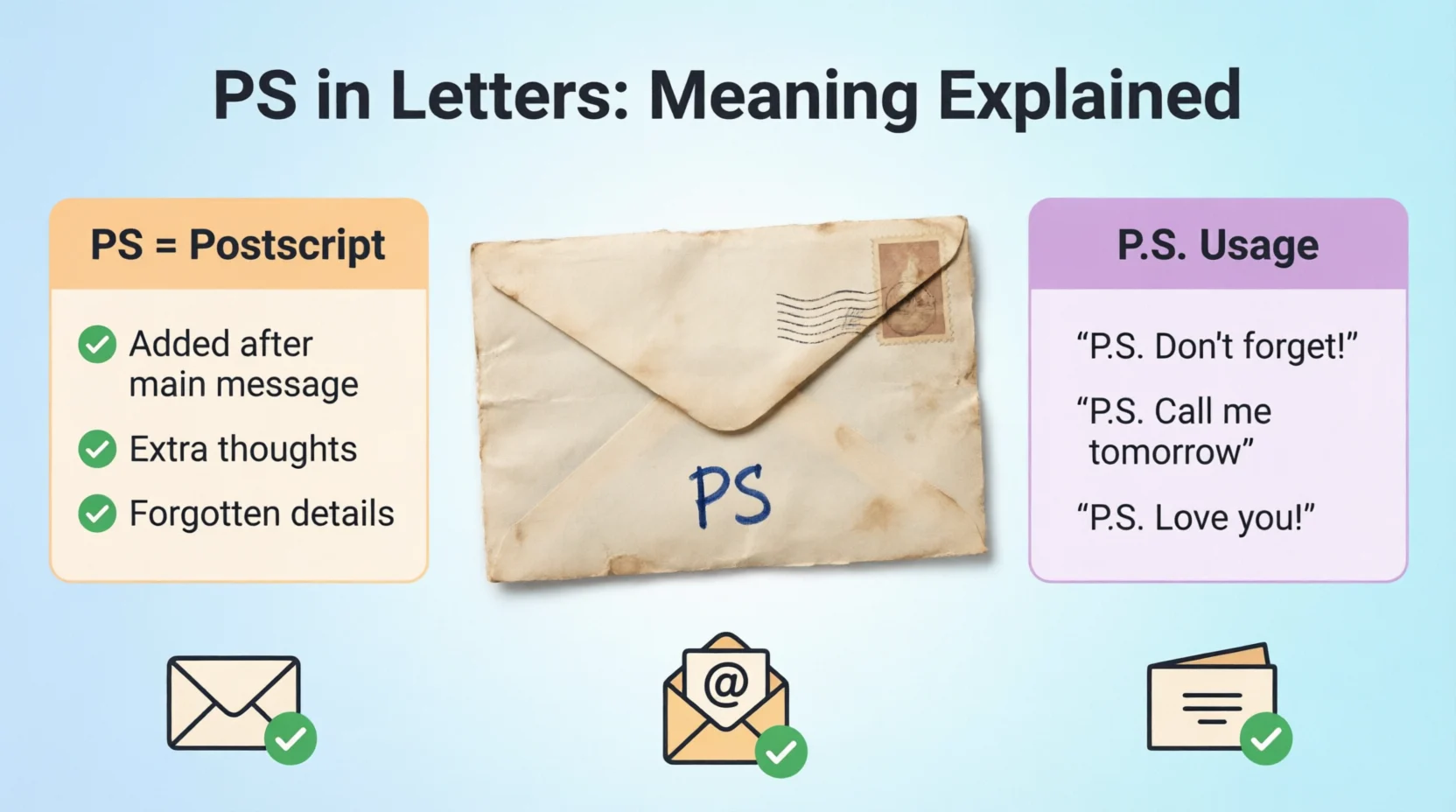
PS stands for “Postscript.”
It comes from the Latin phrase “post scriptum,” which literally means “written after.”
In simple terms:
PS is something you add after finishing your main message.
It is used when you want to include an extra thought, reminder, or important note after you’ve already signed off or finished writing.
Think of it like this:
You’ve already said everything you needed… but suddenly remember one more thing.
Instead of rewriting the entire message, you simply add a “PS.”
The Origin of PS (Why It Exists)
Before emails and phones existed, people wrote handwritten letters. Once a letter was finished, it was sealed and sent. If the writer forgot something, they couldn’t just go back and edit it.
So they used:
P.S. = “Oh wait, I forgot something!”
This became a standard writing habit.
Even today, when we can easily edit messages, PS still survives because it adds a personal, casual, and slightly emotional touch to communication.
How PS Is Used in a Letter
In traditional letter writing, PS appears after the signature.
Here is a simple example:
Dear Sarah,
I hope you are doing well. I wanted to tell you that I will visit next week and stay for three days. Let me know if you are free.
Best regards,
Ali
P.S. I am really excited to see your new house!
In this example, the main message is complete. The PS adds an extra thought that is still related but not part of the main content.
Why People Use PS Today
Even though modern communication allows editing and rewriting, PS is still popular. Why?
1. It feels natural and human
A PS makes a message feel more personal and less formal.
2. It highlights important extra thoughts
People often use PS to emphasize something they don’t want the reader to miss.
3. It adds emotional tone
A PS can feel warm, funny, or thoughtful.
4. It works like a “bonus message”
It’s like saying, “Oh, one more thing…”
PS in Text Messages and Social Media
In texting and online chats, PS is used slightly differently but with the same idea.
People often use it for:
- jokes
- reminders
- emotional notes
- afterthoughts
- funny twists
Example in a text message:
Hey, I’ll be late for the meeting. Traffic is crazy.
PS: Don’t start without me 😅
Here, the PS adds a light, casual tone.
Example in social media caption:
Had an amazing day at the beach 🌊
PS: Sunburn is real, send aloe vera 😂
This makes the post feel more relatable and human.
PS vs P.S. – Is There a Difference?
You might see it written in two ways:
- PS
- P.S.
Both mean the same thing. The difference is only style.
- P.S. (with dots) → traditional and formal writing style
- PS (without dots) → modern digital usage (texting, social media)
Both are correct. It just depends on context.
What About PPS and PSS?
Once you understand PS, you might notice even more versions:
1. PPS (Post-Postscript)
This means:
“A note added after the PS.”
Example:
PS: Don’t forget to bring snacks.
PPS: Actually, bring drinks too.
2. PSS (Post-Subscript / rarely used)
This is not very common in everyday writing, but some people use it jokingly or creatively to add another layer after PPS.
In real life, most people stop at PS or PPS.
Simple Examples of PS in Real Life
Let’s look at different situations so you can understand how flexible PS is.
Friendly message:
Hey, I’ll call you later tonight.
PS: Tell your brother I said hi!
Work email:
Please review the attached document before Friday.
PS: Let me know if you need any changes.
Romantic message:
I had a great time with you today ❤️
PS: I’m already missing you.
Funny message:
Don’t forget the assignment deadline tomorrow.
PS: Yes, I also forgot mine once 😅
Each example shows how PS changes tone depending on context.
When Should You Use PS?
PS is useful, but it shouldn’t be overused. Here’s when it works best:
Use PS when:
- You forgot to mention something important
- You want to add a friendly note
- You want to highlight a final thought
- You want to sound casual or personal
Avoid PS when:
- Writing very formal documents
- Writing legal or official reports
- The message is already too long or complicated
In formal writing, everything should be included in structured paragraphs instead.
Why PS Still Feels Powerful in Modern Communication
Even though we have editing tools, PS still has a strong emotional effect.
Why?
Because it feels like:
- a personal whisper at the end
- a secret afterthought
- a human touch in digital writing
Psychologically, readers often pay extra attention to PS because it stands out visually and feels intentional.
That’s why marketers, writers, and even influencers sometimes use PS in emails and posts.
Common Mistakes People Make with PS
Even though it’s simple, people sometimes use it incorrectly.
1. Writing too many PS lines
Wrong:
PS: Don’t forget this.
PS: Also remember that.
PS: One more thing.
Better:
Use PS or PPS instead of repeating PS endlessly.
2. Making PS part of the main message
PS should always come AFTER the main thought, not inside it.
Wrong:
PS I will go to the store and PS buy milk.
Correct:
I will go to the store.
PS: I will buy milk.
3. Using PS in overly formal writing
Avoid using PS in legal documents, academic papers, or official reports unless absolutely necessary.
PS in Digital Culture and Internet Slang
In modern internet culture, PS has evolved beyond just letters.
It is now used as:
- a storytelling tool
- a humor element
- a way to add personality to posts
- a soft emotional ending
On platforms like Instagram, Facebook, and Twitter-style posts, PS often adds a relatable twist that makes content feel more real.
Example:
Just finished a 10 km run 🏃♂️
PS: I think my legs have officially stopped working.
This kind of usage is extremely common today.
Why PS Works So Well in Communication
The reason PS is still alive in 2026 communication habits is simple:
It breaks structure in a good way
Instead of being perfectly organized, it adds a human “afterthought.”
It creates curiosity
People naturally read PS because it feels like a bonus message.
It feels conversational
It mirrors how people actually think and speak.
Quick Summary of PS Meaning
To keep it simple:
- PS = Postscript
- It means “something added after the main message”
- It is used for extra thoughts, reminders, or emotional notes
- It works in letters, emails, and modern texting
- It makes messages feel more personal and natural
Final Thoughts
Understanding what “PS” means might seem small, but it actually gives you insight into how human communication works. Even in today’s fast digital world, people still want to add that extra thought at the end of a message—something personal, something real.
That’s exactly what PS does.
It’s not just an old writing habit. It’s a reminder that communication is not only about structure—it’s also about emotion, timing, and connection.
So next time you see “PS” at the end of a message, you’ll know it’s not random at all. It’s simply someone saying:
“Wait… there’s one more thing I want you to know.”
descover more post
What Does BDE Mean in Text Real Meaning Examples 2026
What Does SPWM Mean in Text Real Meaning Examples 2026
What Does what does atp mean texting Mean in Text 2026

N. Vexa is a dedicated content writer who specializes in explaining words, meanings, and internet slang in the simplest way possible. With a strong focus on clarity and accuracy, N. Vexa creates content that helps readers quickly understand modern language without confusion. Known for a hardworking approach and attention to detail, the goal is always to make information easy, useful, and accessible for everyone.