
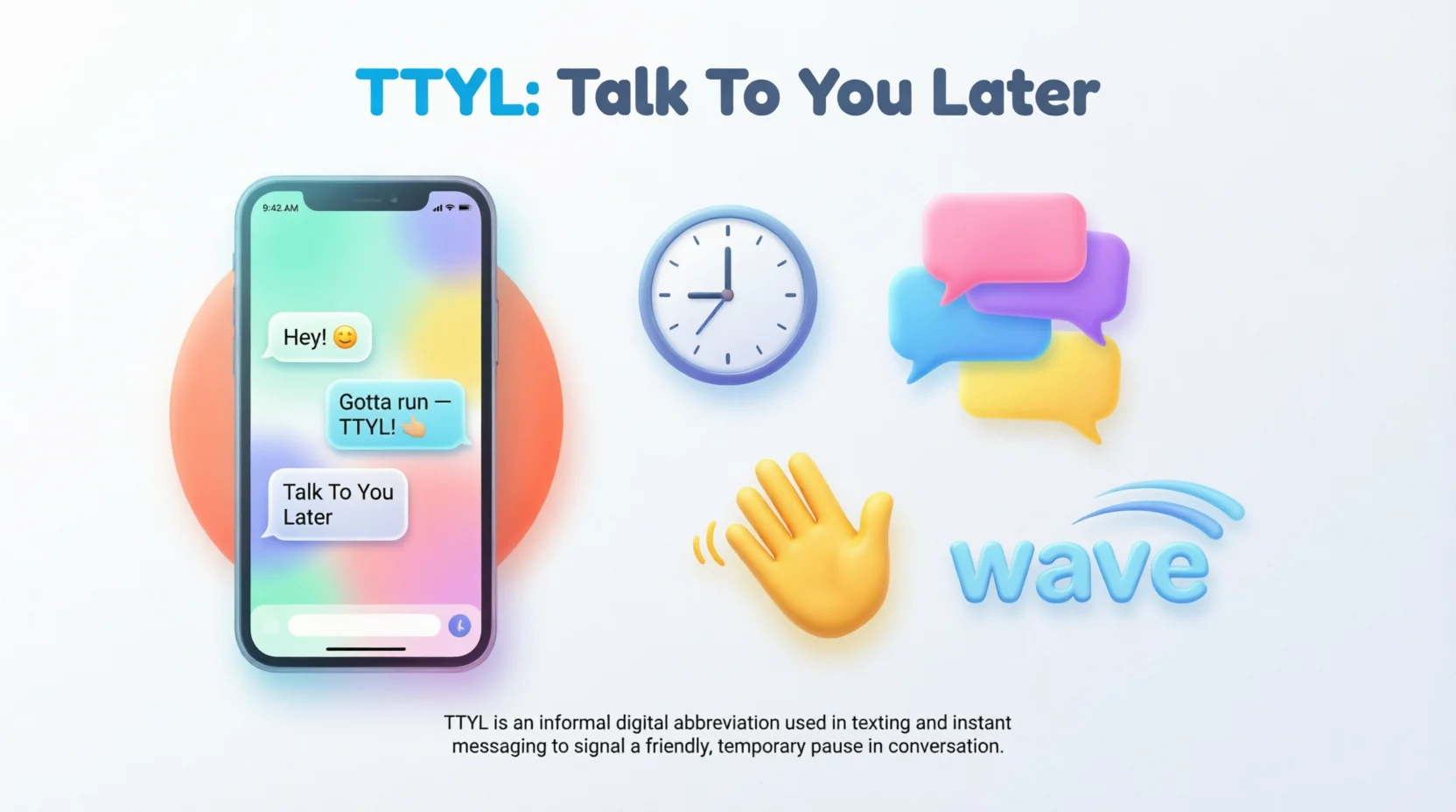
If you’ve ever been chatting with someone online and suddenly saw “TTYL” pop up at the end of a message, you’re not alone in wondering what it means. Internet slang can feel like a different language, especially if you’re new to texting or social media.
Let’s break it down in a simple, clear way so you not only understand what TTYL means, but also how and when to use it naturally in your own conversations.
What Does TTYL Mean?
TTYL stands for “Talk To You Later.”
It’s a short and friendly way to end a conversation, especially in text messages, chats, or social media.
Instead of typing a full sentence like:
“Okay, I’ll talk to you later.”
People simply write:
“TTYL”
It saves time and feels casual.
Why Do People Use TTYL?
Online communication is fast. People prefer short messages that get the point across quickly. That’s where abbreviations like TTYL come in.
Here’s why it’s popular:
- It’s quick to type
- It sounds friendly, not formal
- It clearly ends a conversation without being rude
- It fits perfectly in texting culture
Think of it like a polite wave goodbye in digital form.
When Should You Use TTYL?
You can use TTYL in many everyday situations. It works best in casual conversations.
Common situations include:
- Ending a chat with friends
- Leaving a conversation to do something else
- Signing off from social media or messaging apps
- Saying goodbye without sounding too serious
Example:
- “I have to go eat dinner. TTYL!”
- “Got a meeting now, TTYL.”
It tells the other person: “I’m leaving now, but we’ll talk again soon.”
Real-Life Examples of TTYL in Text
Let’s look at how people actually use it in conversations.
Example 1:
Friend 1: I’m getting sleepy 😴
Friend 2: Same here lol
Friend 1: Okay, TTYL
Example 2:
You: I’ll finish this work and message you later
Friend: Sure, TTYL
Example 3:
Sibling: Mom is calling you
You: Oh okay, TTYL
Notice something? It always comes at the end of a conversation.
Is TTYL Formal or Informal?
TTYL is informal.
You should avoid using it in:
- Work emails
- Professional messages
- School assignments
- Formal communication
Instead, use:
- “Talk to you later.”
- “I’ll get back to you soon.”
- “Speak with you later.”
TTYL is best saved for casual chats with friends, family, or people you’re comfortable with.
TTYL vs Other Similar Texting Slang
There are many similar abbreviations. Let’s compare a few so you don’t get confused.
1. TTYL vs BRB
- TTYL: Ending the conversation for now
- BRB (Be Right Back): Leaving briefly but coming back soon
👉 Example:
“Wait, BRB” = I’ll return
“Okay, TTYL” = I’m done chatting for now
2. TTYL vs GTG
- TTYL: Friendly goodbye
- GTG (Got To Go): More urgent exit
👉 Example:
“GTG, my battery is dying!”
“TTYL, good night!”
3. TTYL vs Bye
- Bye: General goodbye
- TTYL: Goodbye with the promise of talking again
TTYL feels a bit warmer and more connected.
Where Is TTYL Commonly Used?
TTYL is widely used across many platforms.
You’ll often see it on:
- Facebook Messenger
- Instagram DMs
- Snapchat
- SMS (text messages)
- Online gaming chats
Basically, anywhere people chat casually.
Is TTYL Still Popular in 2026?
Yes, but with a twist.
While TTYL is still understood and used, newer generations sometimes prefer:
- “ttyl” (lowercase)
- “talk later”
- “later”
- “cya” (see you)
Still, TTYL hasn’t disappeared. It remains a classic and widely recognized slang term.
Should You Use Uppercase or Lowercase?
Both are correct:
- TTYL (uppercase)
- ttyl (lowercase)
Lowercase is more common today because it feels more relaxed.
👉 Example:
“ok ttyl” looks more natural in modern texting.
Is TTYL Rude?
No, not at all.
TTYL is actually polite because it:
- Signals you’re leaving
- Avoids abruptly ending the chat
- Shows you plan to talk again
However, tone matters.
Good:
“Okay, I’ll go now, ttyl 😊”
Not great:
“ttyl” (with no context, suddenly)
Always try to keep it friendly.
How to Respond to TTYL
If someone sends you TTYL, you don’t need to overthink your reply.
Here are simple responses:
- “Okay, bye!”
- “Talk later!”
- “See you!”
- “Take care!”
Or you can just react with an emoji 👍
Common Mistakes to Avoid
Even simple slang can be misused. Here are a few mistakes people make:
1. Using it in formal situations
Avoid using TTYL in professional settings.
2. Using it mid-conversation
TTYL should come at the end, not in the middle.
❌ Wrong:
“TTYL, what are you doing later?”
3. Overusing it
If you say TTYL in every message, it can feel repetitive.
Use it naturally, not forcefully.
The Origin of TTYL
TTYL became popular in the early days of the internet, especially in:
- Chat rooms
- Instant messaging apps
- SMS texting era
Back when typing on phones was slower, shortcuts like TTYL made communication easier.
Over time, it became part of everyday digital language.
Why Learning Slang Like TTYL Matters
Understanding slang isn’t just about words. It helps you:
- Communicate naturally online
- Understand conversations better
- Avoid confusion in chats
- Connect with people more easily
Even simple abbreviations like TTYL can make a big difference in how you sound in conversations.
Quick Summary
Let’s wrap it up in a simple way:
- TTYL means: Talk To You Later
- Used for: Ending casual conversations
- Tone: Friendly and informal
- Best place to use: Texts, chats, social media
- Not suitable for: Formal or professional communication
Final Thoughts
TTYL is one of those small internet expressions that carries a lot of meaning in just four letters. It’s simple, friendly, and still widely understood, even as new slang keeps evolving.
If you’re just getting comfortable with texting language, this is an easy one to start using. Just remember—use it naturally, keep it casual, and you’ll sound like a pro in no time.
So next time you’re wrapping up a chat…
You know what to say — TTYL 🙂
descover more post
What Does gng means Mean in Text Real Meaning Examples …
What Does GN Meaning in Text Real Meaning Examples 2026
What Does GTG Stand for in Text Real Meaning, Examples 2026

M. Kiro is a passionate writer who enjoys turning everyday questions into clear and meaningful answers. He focuses on creating helpful, honest, and easy-to-read content for people who just want simple explanations without confusion. His work reflects consistency, hard work, and a deep commitment to helping readers understand things better.