
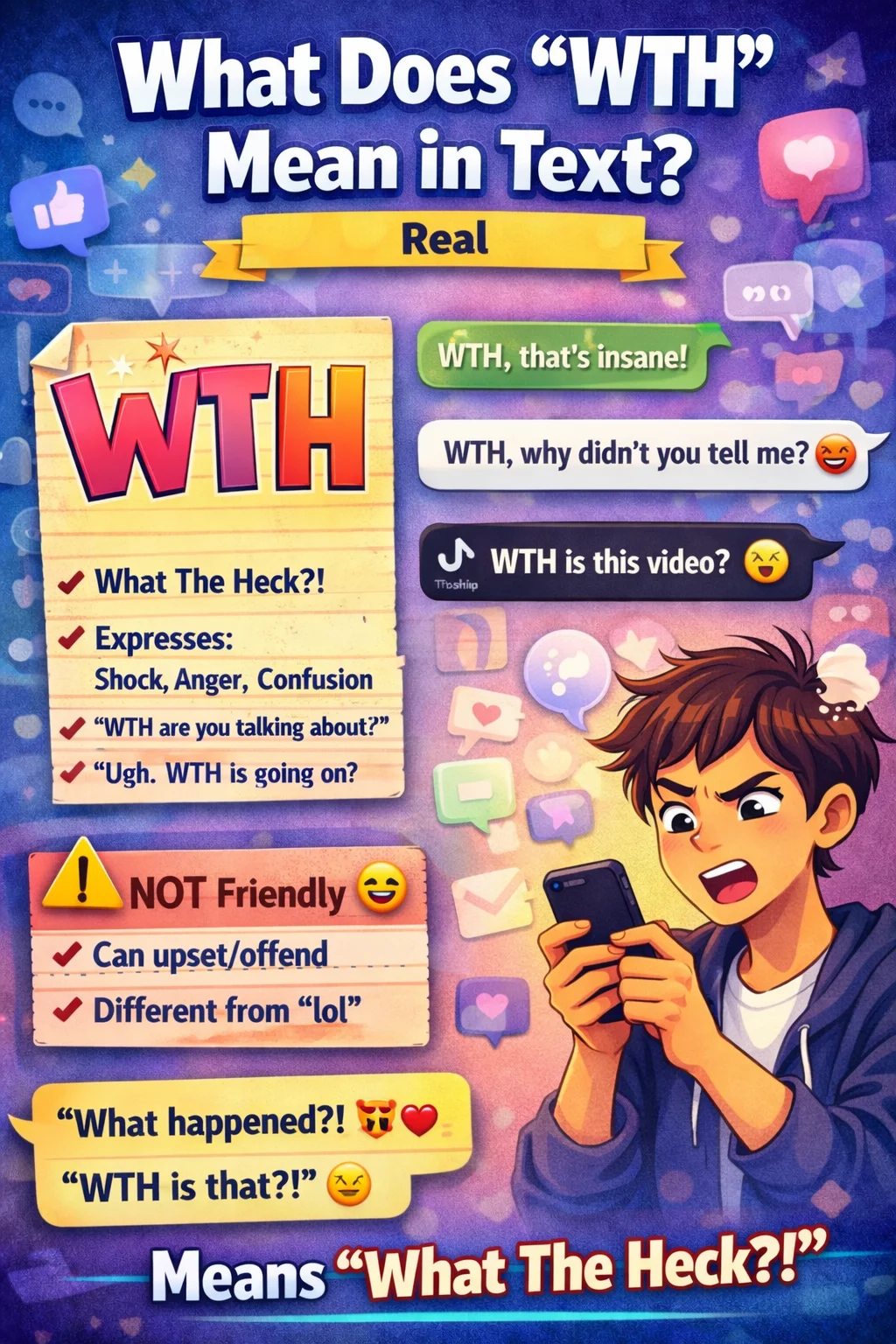
If you’ve ever been scrolling through chats, comments, or social media and suddenly seen someone type “WTH”, you might have paused and wondered what it actually means.
Internet slang can feel confusing at first, especially when people use short forms instead of full sentences. But once you understand them, they become super easy to recognize—and even fun to use.
In this article, we’ll break down the wth full form in chat, explain its meaning, explore how people use it in real conversations, and show practical examples so you never feel lost again.
What Does WTH Mean in Text?
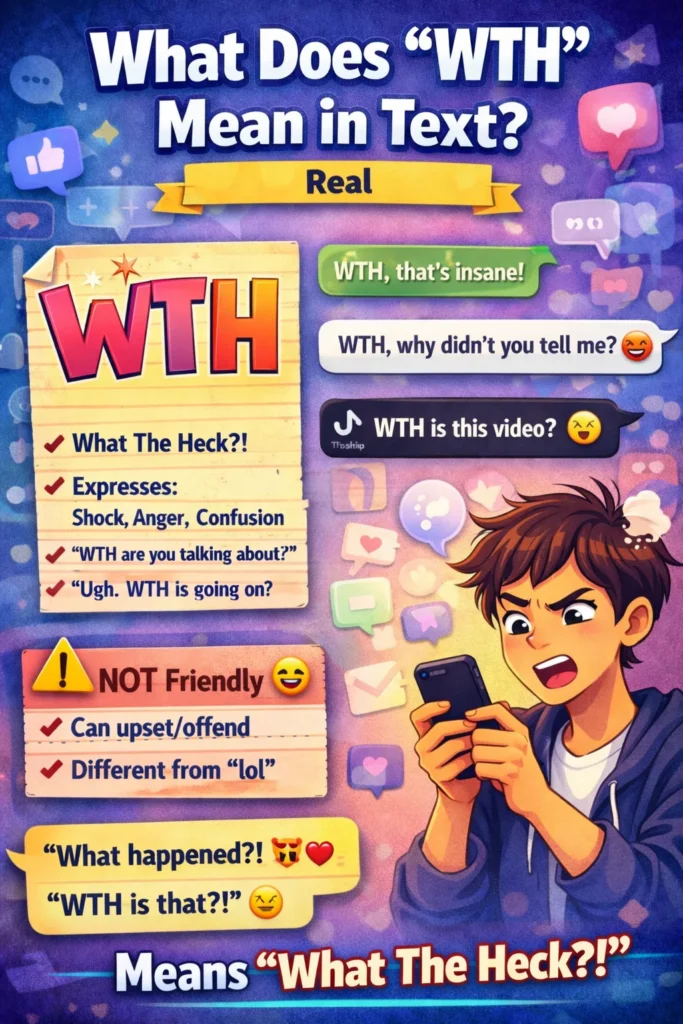
WTH stands for “What The Heck”.
It is an informal expression used in chats, messaging apps, and social media to show surprise, confusion, shock, or disbelief.
Sometimes, people also interpret WTH as a milder version of a stronger phrase that starts with a similar structure. However, in everyday communication, it is generally used in a casual, non-offensive way.
Simple Meaning:
👉 WTH = “What The Heck”
👉 Used to express surprise, confusion, or frustration
Why Do People Use WTH?
People use abbreviations like WTH for several reasons:
- Speed: Typing short forms is faster than writing full sentences
- Convenience: Common in quick conversations
- Casual tone: Makes messages feel relaxed and informal
- Social media style: Fits the fast-paced nature of online communication
In short, WTH helps people react quickly without typing long explanations.
How WTH Is Used in Conversations
WTH is often used as an emotional reaction. It can express different feelings depending on the context.
1. Surprise
When something unexpected happens:
- “WTH! I didn’t know the meeting was today.”
2. Confusion
When something doesn’t make sense:
- “WTH is going on here?”
3. Frustration
When something annoying or unexpected happens:
- “WTH, why did my phone shut down again?”
4. Shock or disbelief
When reacting to surprising news:
- “WTH! He actually did that?”
Examples of WTH in Real-Life Chats
Here are some natural examples of how WTH appears in conversations:
- Friend 1: “I just won a free trip!”
Friend 2: “WTH, seriously? That’s amazing!” - User: “My order got canceled without notice.”
Reply: “WTH, that’s so frustrating.” - Text message: “WTH are you talking about?”
(Used when someone is confused or unsure) - Social media comment:
“WTH, this movie ending was unexpected!”
These examples show how flexible and expressive the phrase is in casual communication.
Tone and Context Matter
Although WTH is generally harmless, the tone depends on how it is used.
- Friendly chats → playful or surprised tone
- Arguments → may sound frustrated or slightly aggressive
- Social media → often used casually for reactions
Understanding the context is important because the same word can carry different emotions depending on the situation.
Is WTH Considered Rude?
WTH is usually considered mild and informal, not offensive in most contexts.
However:
- It may sound abrupt if used in serious or professional conversations
- It is better avoided in formal emails or workplace communication
- In casual chats with friends, it is perfectly acceptable
If you’re unsure, it’s always safer to use full sentences in formal situations.
WTH vs Similar Slang Terms
WTH is part of a larger group of internet expressions used to react quickly.
Here are some similar slang terms:
- WTF – stronger expression of shock or frustration
- OMG – expresses surprise (“Oh My God”)
- LOL – expresses laughter or amusement
- SMH – shows disappointment or disbelief (“Shaking My Head”)
Compared to these, WTH is relatively milder and more neutral.
Where Is WTH Commonly Used?
You’ll see WTH used in many digital spaces:
- WhatsApp chats
- Instagram comments
- Twitter/X posts
- TikTok comments
- Facebook conversations
- Online gaming chats
It’s especially common in fast-paced conversations where people react instantly.
Variations and Similar Expressions
People sometimes modify WTH or use similar phrases:
- “WTH is this?”
- “WTH happened?”
- “What the heck?” (full form)
- “What the…” (implied expression)
These variations serve the same purpose—expressing surprise or confusion in a casual way.
When Should You Use WTH?
You can use WTH when:
- Talking casually with friends
- Reacting to unexpected news
- Expressing mild frustration or confusion
- Engaging in social media discussions
Avoid using it when:
- Writing formal emails
- Speaking in professional meetings
- Communicating with authority figures
- Submitting academic or official documents
Why Understanding Slang Like WTH Matters
Understanding slang is more than just knowing definitions—it helps you:
- Communicate better online
- Understand conversations quickly
- Feel more confident in digital spaces
- Avoid misunderstandings
- Stay updated with modern communication trends
Internet slang evolves constantly, and knowing terms like WTH keeps you connected to how people actually talk online.
Real-Life Insight
Many people first encounter slang like WTH when chatting with friends or browsing social media. At first, it may feel confusing, but over time, these expressions become second nature.
For example, someone new to online communication might see a comment like “WTH just happened?” and feel lost. But once they learn the meaning, they can instantly understand the emotion behind the message—shock, confusion, or disbelief.
This is what makes slang powerful: it communicates emotion quickly without long explanations.
Final Thoughts
The wth full form in chat is “What The Heck,” and it’s widely used in informal conversations to express surprise, confusion, or frustration.
It’s simple, expressive, and part of everyday digital communication. While it’s perfectly fine for casual chats, it’s best avoided in formal or professional contexts.
Understanding terms like WTH not only improves your communication but also helps you navigate online conversations with confidence.

N. Vexa is a dedicated content writer who specializes in explaining words, meanings, and internet slang in the simplest way possible. With a strong focus on clarity and accuracy, N. Vexa creates content that helps readers quickly understand modern language without confusion. Known for a hardworking approach and attention to detail, the goal is always to make information easy, useful, and accessible for everyone.