
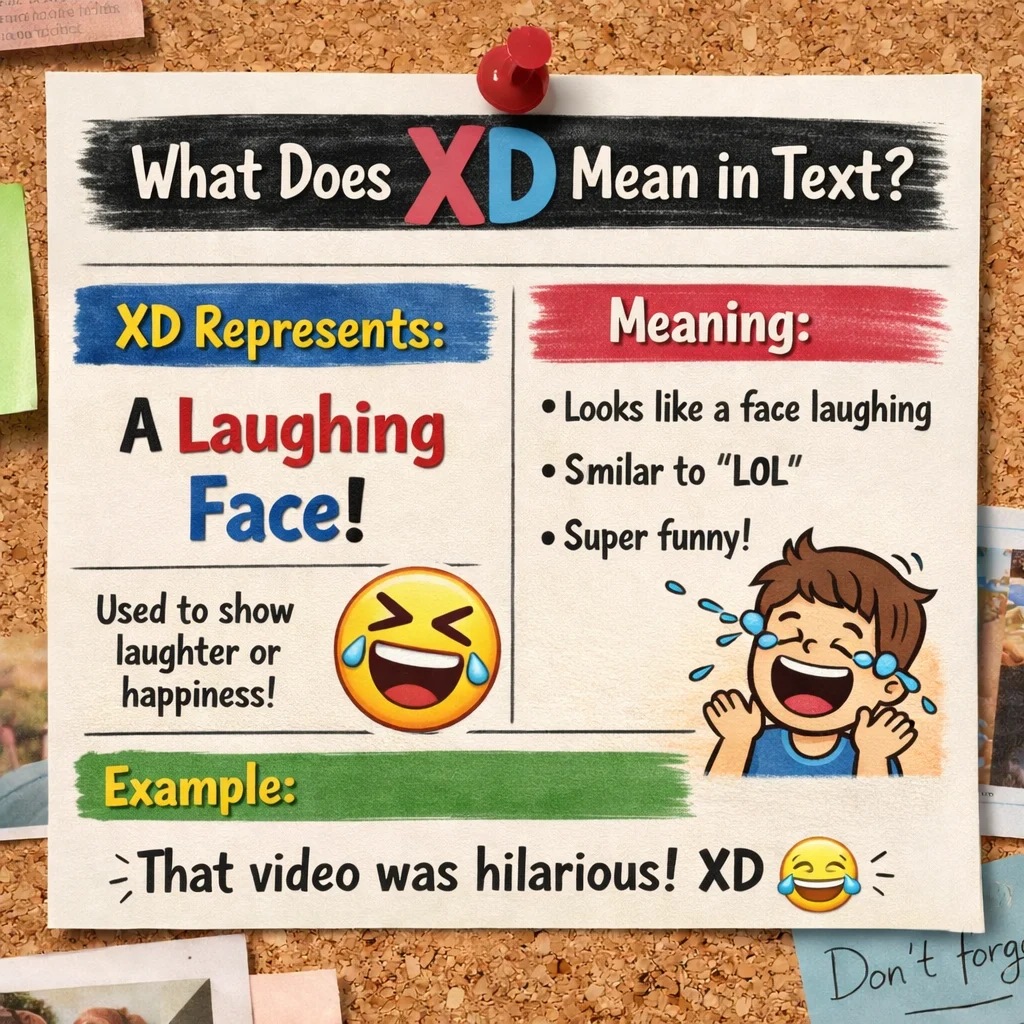
If you’ve ever received a message full of abbreviations, emojis, or random-looking combinations like “XD,” you’re not alone in wondering what it actually means. Internet slang evolves quickly, and what seems confusing at first is often a simple expression of emotion or tone. Among these shorthand expressions, “XD” is one of the most widely used across texting apps, social media platforms, gaming chats, and comment sections.
People search for what does xd mean because it appears in casual conversations where tone matters more than words. In many cases, “XD” is used to show laughter, amusement, or a playful reaction. Instead of typing “haha” or “lol,” users sometimes use “XD” to visually represent a laughing face. Once you understand its meaning, it becomes easy to recognize the mood behind a message and respond appropriately.
In this article, we’ll break down the meaning of “XD” in simple terms, explore how and when it’s used, and show real examples so you can confidently understand and use it in everyday conversations.
What Does XD Mean in Text?
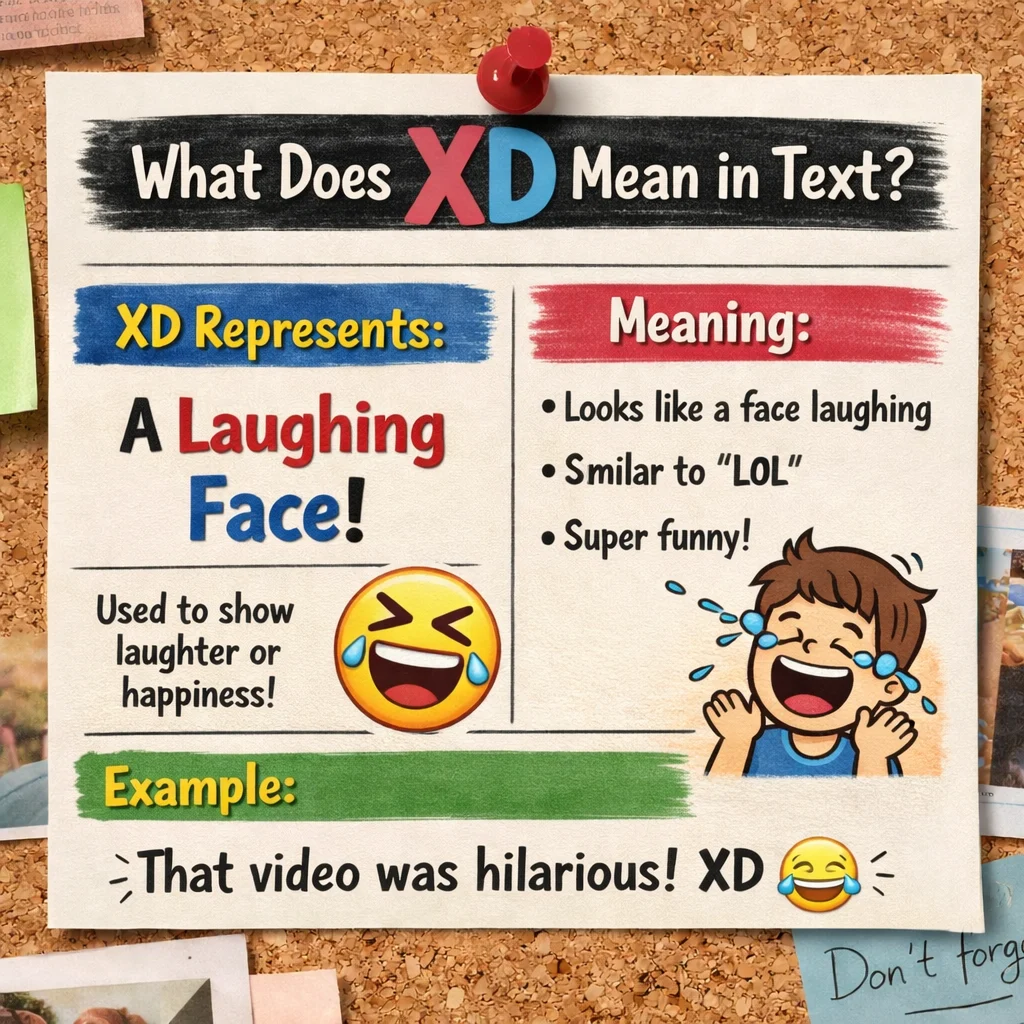
At its core, “XD” is an emoticon that represents a laughing face.
- “X” represents closed eyes (as if squinting while laughing)
- “D” represents a wide open mouth (laughing expression)
Put together, it visually resembles a face laughing hard with eyes shut.
Simple Meaning:
- XD = Laughing / Big Laugh / Extreme amusement
Examples:
- “That joke was so funny XD”
- “I can’t believe you did that XD”
- “XD stop, I’m dying laughing”
In most cases, “XD” signals that something is humorous, sarcastic, or lighthearted.
Origin & Background of XD
“XD” comes from early internet culture, long before modern emojis became common. In the early days of online messaging, people used keyboard characters to create expressive faces called emoticons.
Before smartphones had built-in emoji keyboards, users relied on combinations like:
- 🙂 for a smile
- 🙁 for sadness
- XD for laughter
The “XD” emoticon became especially popular in online forums, gaming chats, and messaging platforms like MSN Messenger and early internet chatrooms.
Over time, as emojis became more advanced, “XD” still remained relevant because:
- It feels more casual and nostalgic
- It adds personality to text
- It’s quick to type
Even today, many users prefer “XD” because it carries a slightly exaggerated or playful tone compared to standard emojis.
Real-Life Conversations Using XD
To understand how “XD” is used naturally, here are some realistic conversations:
1. WhatsApp Chat
Person A:
I just spilled coffee on my notes right before the exam 😭
Person B:
No way XD that’s actually unlucky
Person A:
I know right… worst timing ever XD
2. Instagram Comments
User 1:
This reel is too accurate XD
User 2:
Fr XD this is literally my life
3. TikTok Comment Section
Commenter:
Why is this so relatable XD
Creator Reply:
Because we’ve all been there XD
4. Gaming Chat
Player 1:
I accidentally jumped off the map XD
Player 2:
Bro how XD
These examples show that “XD” is used naturally to react to humor, awkward moments, or relatable situations.
Emotional & Psychological Meaning of XD
Beyond its literal definition, “XD” carries emotional tone.
It often communicates:
- Lighthearted humor
- Playfulness
- Friendly teasing
- Casual energy
- A relaxed mood
Psychologically, people use “XD” to soften their tone. In text-based communication, messages can sometimes feel blunt or unclear. Adding “XD” helps signal that the speaker is joking or not serious.
Example Scenario:
Imagine someone says:
“You’re so slow XD”
Without context, it might sound rude. But the “XD” indicates that the comment is playful rather than insulting.
In this way, “XD” acts as a tone marker. It helps prevent misunderstandings and keeps conversations friendly.
Usage in Different Contexts
Social Media
On platforms like Instagram, TikTok, and Twitter, “XD” is commonly used in comments to react to funny posts, memes, or relatable content.
Example:
“This video is too real XD”
Friends & Casual Conversations
Among friends, “XD” is used freely in informal chats.
Example:
“You forgot your wallet again XD”
Work or Professional Settings
“XD” is generally not appropriate in formal communication such as emails, business messages, or professional discussions.
It may appear unprofessional or too casual.
Casual vs Serious Tone
- Casual tone → “XD” is widely acceptable
- Serious tone → Avoid using it
Using “XD” in serious discussions can reduce clarity or make the message seem insensitive.
When NOT to Use XD
Although “XD” is harmless in most casual contexts, there are situations where it’s better to avoid it:
- Formal emails or workplace communication
- Serious conversations (e.g., complaints, conflicts)
- Sensitive topics (e.g., health, personal issues)
- Professional networking messages
Using it in the wrong context may make your message appear unprofessional or dismissive.
Common Misunderstandings About XD
Misunderstanding 1: It’s an acronym
Many people think “XD” stands for something like “extra delay” or “X domain.” In reality, it’s not an acronym — it’s an emoticon.
Misunderstanding 2: It has a hidden meaning
“XD” does not have a secret or coded meaning. It simply represents laughter.
Misunderstanding 3: It’s outdated
While older than emojis, “XD” is still actively used, especially in gaming and online communities.
Misunderstanding 4: It’s always sarcastic
Sometimes it is sarcastic, but often it’s genuinely used to express laughter.
Comparison Table
| Expression | Meaning | Tone | Usage |
|---|---|---|---|
| XD | Laughing / amusement | Playful | Casual chats, memes |
| LOL | Laughing out loud | Neutral | General texting |
| LMAO | Strong laughter | Informal | Friends, humor |
| 😂 Emoji | Laughing with tears | Visual | Social media |
| Hehe | Mild laughter | Soft / shy | Light humor |
Key Insight
“XD” is unique because it visually resembles a face, making it feel more expressive than plain text abbreviations like “lol.” It often conveys exaggerated or playful laughter rather than just a simple reaction.
Variations / Related Forms of XD
Here are some variations and related expressions:
- xD
Lowercase version, same meaning. - XD!!!
Stronger emphasis on laughter. - XDD
Indicates even more intense laughter. - XDXD
Repeated for extra exaggeration. - xd
Casual, minimal version. - XD lol
Combines emoticon with text for emphasis. - XD 😂
Mixed format using both emoticon and emoji. - XD??
Used when reacting with confusion and humor. - XD bro
Common in casual friend conversations. - XD af
Informal slang intensifier used in memes.
Each variation adjusts tone slightly but keeps the same core meaning.
How to Respond When Someone Uses XD
Here are some natural ways to reply:
Casual Replies
- “Haha XD true!”
- “I know right XD”
- “That was actually funny XD”
Funny Replies
- “Don’t laugh at me XD”
- “I blame you XD”
- “XD stop exposing me”
Mature Replies
- “Yeah, that was a good one.”
- “Glad you found it funny.”
Respectful Replies
- “I appreciate your humor.”
- “That’s a funny observation.”
Your response depends on your relationship and the tone of the conversation.
Regional & Cultural Usage
Western Culture
Widely used in texting, memes, and gaming communities. Often replaced by emojis but still recognized.
Asian Culture
Popular among younger users, especially in online gaming and anime communities.
Middle Eastern Culture
Used mainly by youth in informal chats and social media platforms.
Global Internet Usage
“XD” is universally understood across many online communities, even if not everyone uses it daily.
Generational Differences
- Gen Z: Uses emojis more but still understands and sometimes uses “XD” for humor
- Millennials: More familiar with “XD” from earlier internet culture
Is XD Safe for Kids?
Yes, “XD” is generally safe for kids and teens.
It does not contain offensive or inappropriate meaning. However, like all slang, its appropriateness depends on context.
Parents or educators may simply need to ensure it’s used in casual, non-disruptive communication.
FAQs
1. What does XD mean in chatting?
It means laughter or amusement, similar to “lol” or a laughing emoji.
2. Is XD still used today?
Yes, especially in gaming chats, memes, and informal conversations.
3. Is XD formal or informal?
It is strictly informal and should not be used in professional communication.
4. Does XD mean sarcasm?
Not always. It can be genuine laughter or playful tone depending on context.
5. What is the difference between XD and LOL?
“XD” visually represents laughter, while “LOL” is text-based shorthand for laughing.
6. Can XD be used in emails?
No, it is not appropriate for formal or professional emails.
Conclusion
Understanding what does xd mean is simple once you see it as a visual expression of laughter rather than just random letters. It reflects the early roots of internet communication, where people used characters to express emotions before emojis existed. Today, “XD” continues to thrive in casual chats, social media, and gaming communities because it adds personality, tone, and emotion to digital conversations.
While it’s not suitable for formal settings, it remains a friendly and widely recognized way to show humor or amusement. Once you’re familiar with it, you’ll start noticing it everywhere — in messages, comments, and memes — helping you better understand the tone behind what people are saying.
descover more post
What Does WTH Mean in Text Real Meaning Examples 2026
What Does bde acronym Mean in Text Real Meaning 2026
What Does what is the meaning of xd Mean in Text Real …

S. Varo is a passionate and hardworking content creator who specializes in explaining modern language, symbols, and digital expressions in a simple way. Known for delivering clear, well-researched, and user-focused content, S. Varo believes in creating information that truly helps readers. Every piece is crafted with dedication, accuracy, and a deep understanding of what users are searching for.