
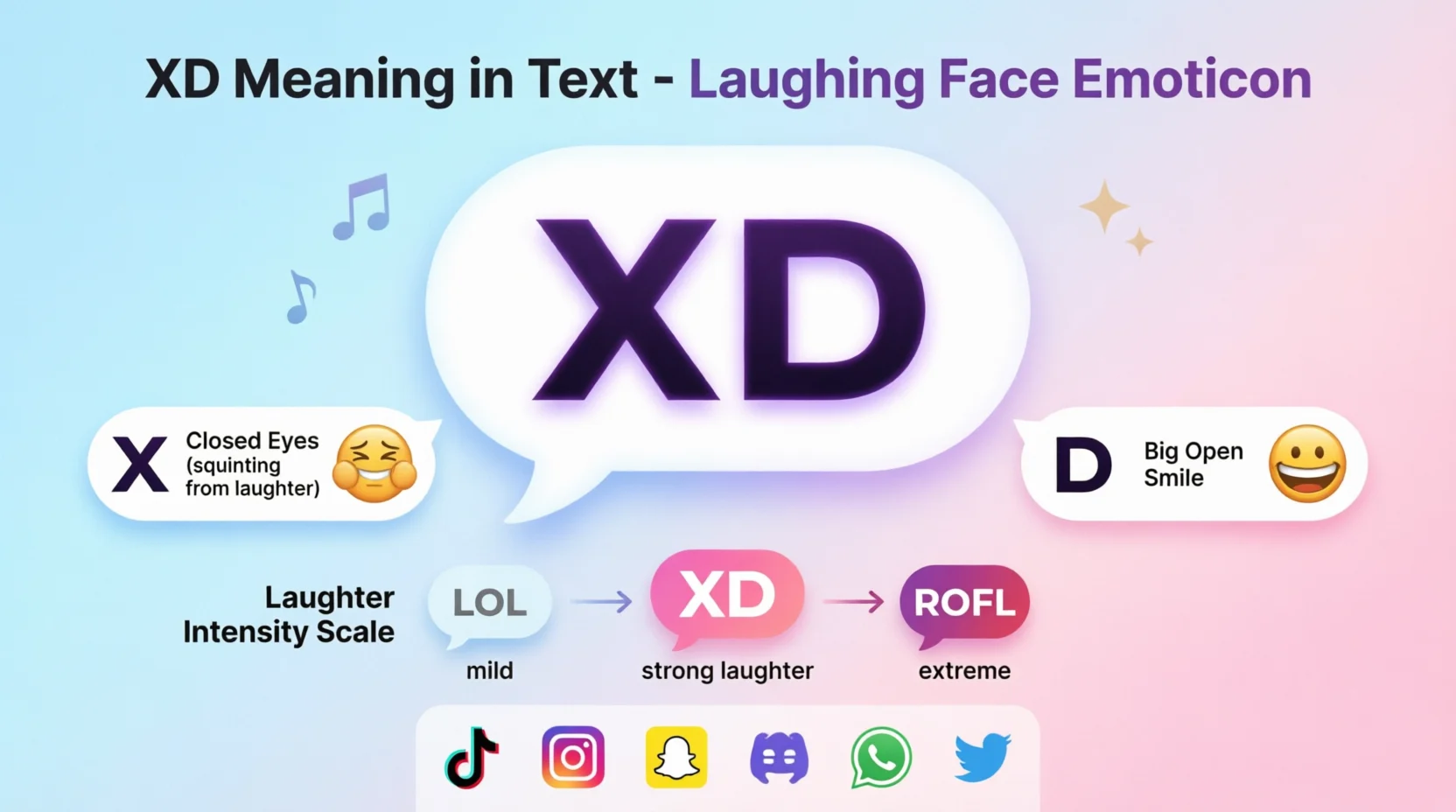
If you’ve spent even a little time chatting online, you’ve probably seen someone type “XD”—and maybe you paused for a second wondering, what does that even mean?
Is it a word? A reaction? Just random letters?
Here’s the thing: XD is one of those internet expressions that looks confusing at first but makes perfect sense once you “see” it. And once you understand it, you’ll start noticing it everywhere—from memes to casual chats to gaming conversations.
In this guide, I’ll break it down in the simplest way possible, with real examples and context so you can actually use it naturally.
What Does XD Mean?
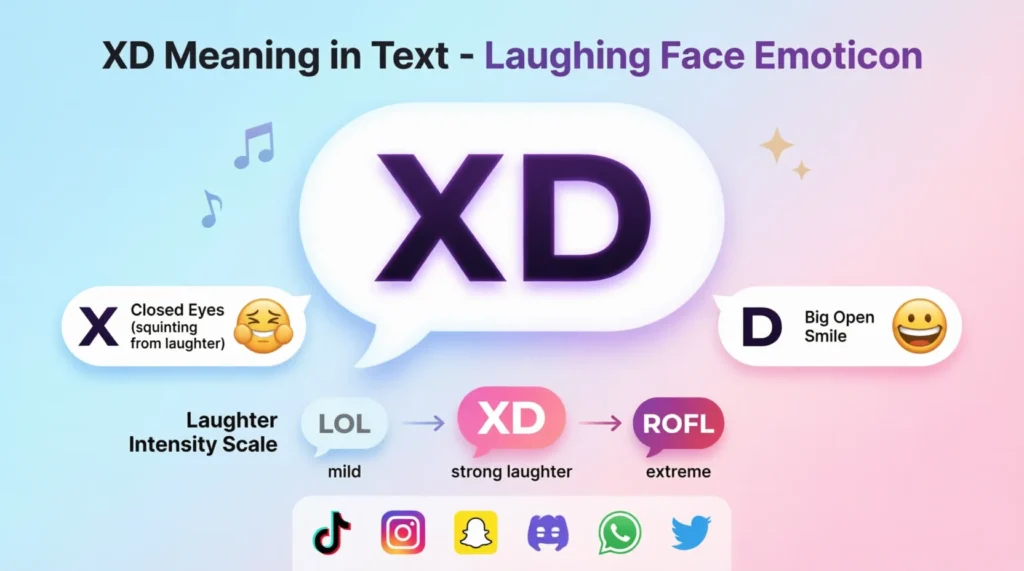
XD is a text expression used to show laughter.
It’s basically the same as saying:
- “LOL”
- “Haha”
- “That’s funny!”
But instead of being a word, XD is a visual emoji made using letters.
Here’s how it works:
- X = closed eyes (like when you laugh hard)
- D = a big open smiling mouth
Put together, it looks like a laughing face.
👉 So, XD = “I’m laughing really hard”
How Is XD Different from LOL?
At first, XD and LOL might seem the same. But they feel slightly different in tone.
- LOL = standard, common, sometimes even automatic
- XD = more expressive, playful, and visual
When someone uses XD, it often feels more:
- Energetic
- Silly
- Emotionally engaged
👉 Think of XD as a stronger, more animated version of laughter.
When Do People Use XD?
People use XD in moments that are:
- Funny
- Awkward in a humorous way
- Slightly ridiculous
- Lighthearted or playful
It’s not usually used in serious conversations.
Real Examples of XD in Text
Let’s make this real with simple examples:
1. Reacting to a joke
“You really tried to microwave ice cream? XD”
2. Playful teasing
“You forgot your own birthday? XD”
3. Gaming chats
“Bro I fell off the map again XD”
4. Funny situation
“I waved back at someone who wasn’t waving at me XD”
In all these cases, XD shows genuine amusement.
Is XD Still Used Today?
Yes—but not as much as before.
XD was extremely popular in:
- Early texting days
- Old-school chatrooms
- Gaming communities
Today, people often use:
- 😂 (crying laughing emoji)
- 😭 (laughing but crying in a dramatic way)
- “LMAO”
Still, XD hasn’t disappeared. It’s just more niche now and often used for a slightly nostalgic or playful vibe.
Who Uses XD the Most?
You’ll commonly see XD used by:
- Gamers
- People who grew up using early internet slang
- Casual online communities
- Friends joking around in chats
It’s less common in:
- Professional conversations
- Formal texting
- Work emails (definitely avoid it there)
Is XD Cringe or Cool?
This depends on context.
Some people think XD feels:
- A bit outdated
- Slightly “cringe” if overused
But others see it as:
- Fun
- Expressive
- Nostalgic
👉 The truth? It’s not about the word—it’s about how you use it.
Used naturally with friends, it feels fine. Forced into every message? It can feel awkward.
Variations of XD
Over time, people have played around with XD to express different levels of emotion:
- xD – same meaning, just lowercase
- XDD – extra laughter
- XD XD – repeating for emphasis
These variations just increase the intensity of the reaction.
When NOT to Use XD
Even though XD is fun, there are moments where it doesn’t fit.
Avoid using it in:
- Serious conversations
- Emotional or sensitive topics
- Professional settings
For example:
❌ “I’m sorry for your loss XD”
(This would feel very inappropriate.)
👉 Always match your tone to the situation.
Why Do People Use XD Instead of Emojis?
Good question.
Even with modern emojis available, some people still prefer XD because:
- It feels more personal and old-school
- It’s quicker to type
- It has a unique charm
- It stands out in a sea of emojis
It’s like choosing handwritten notes over printed text—it just feels different.
The Psychology Behind XD
This might surprise you, but expressions like XD actually serve a deeper purpose.
In real life, we use:
- Facial expressions
- Tone of voice
- Body language
But in text? None of that exists.
So people use things like XD to:
- Show emotion
- Avoid misunderstandings
- Add personality to messages
👉 In a way, XD is a digital substitute for human expression.
A Quick Personal Insight
I remember when I first saw XD years ago—I genuinely thought it was some kind of code.
Then someone explained it, and suddenly I couldn’t unsee the laughing face.
After that, I started noticing how people used it differently. Some used it casually, others used it when something was genuinely hilarious.
And that’s when it clicked:
It’s not just about the letters—it’s about the feeling behind them.
Simple Rule to Remember
If something makes you laugh and you want to show it in a playful, expressive way…
👉 You can use XD.
That’s it. No overthinking needed.
FAQs About XD
1. What does XD stand for?
It doesn’t stand for a phrase. It represents a laughing face (eyes closed + big smile).
2. Is XD the same as LOL?
Similar, but XD feels more expressive and visual.
3. Is XD outdated?
Not completely. It’s less common now but still used in casual chats.
4. Can I use XD in formal messages?
No, it’s best for informal conversations only.
5. What emotion does XD show?
It shows laughter, amusement, or playful humor.
Final Thoughts
At first glance, XD might look like random letters—but once you understand it, it becomes one of the simplest ways to express laughter online.
It’s playful, visual, and surprisingly human.
And that’s what makes it stick around, even as trends change.
descover more post
What Does K Mean in Chat Real Meaning Examples 2026
What Does WTB Mean in Text Real Meaning Examples 2026
What Does what does bsfs mean in Text Real … – Meanliab.com

M. Kiro is a passionate writer who enjoys turning everyday questions into clear and meaningful answers. He focuses on creating helpful, honest, and easy-to-read content for people who just want simple explanations without confusion. His work reflects consistency, hard work, and a deep commitment to helping readers understand things better.