
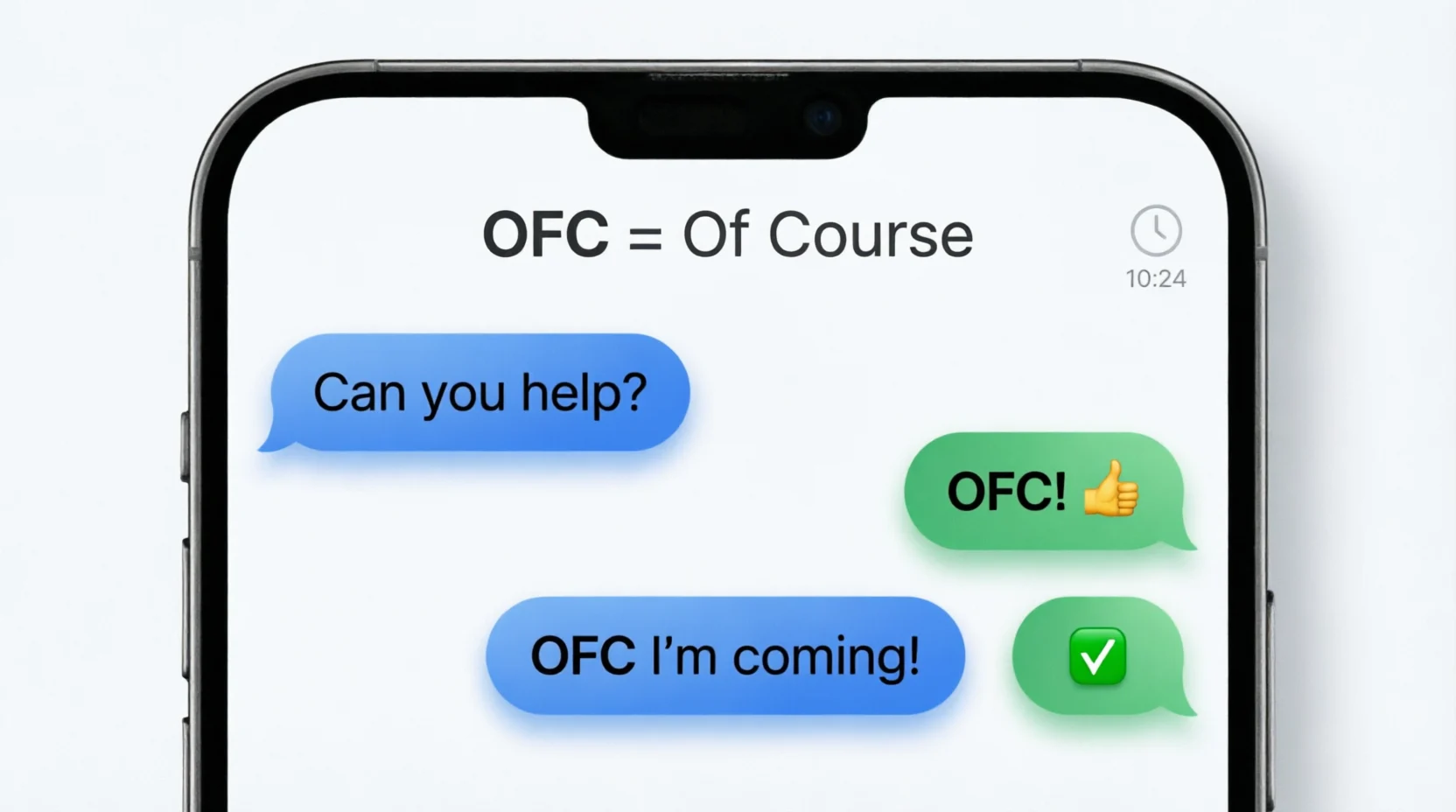
If you’ve spent even a little time chatting online, scrolling through comments, or texting friends, chances are you’ve seen the term “OFC” pop up. It’s short, casual, and used everywhere—from WhatsApp messages to Instagram replies.
But what does OFC actually mean? And why do people use it so often?
In this guide, you’ll learn the real meaning of OFC, how people use it in everyday conversations, and how to understand it naturally—just like a native speaker.
What Does OFC Mean?
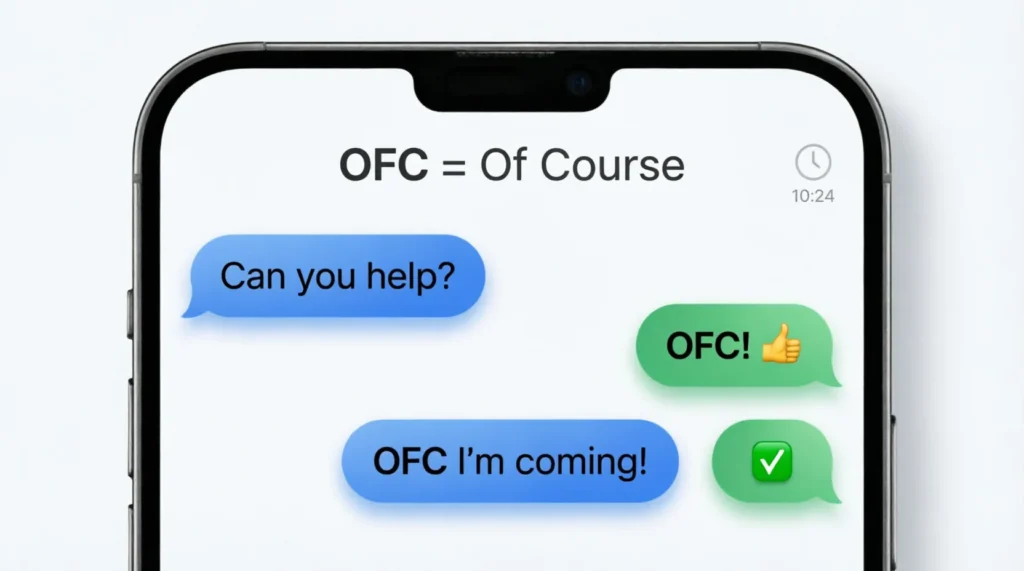
OFC stands for “Of Course.”
It’s a quick and informal way to say:
- Yes
- Definitely
- Obviously
- Sure
People use it to show agreement, confirmation, or something that feels obvious in the moment.
Simple Example:
- “Are you coming tonight?”
- “OFC!”
That reply means: Yes, of course I am.
Why People Use OFC in Text
Online communication is all about speed and convenience. Instead of typing full phrases like “of course,” people shorten them to save time.
But there’s more to it than just saving keystrokes.
Using OFC also:
- Makes messages feel casual and friendly
- Keeps conversations flowing quickly
- Matches the relaxed tone of social media
It’s part of a larger trend where people shorten common phrases—like “LOL,” “BRB,” or “IDK.”
How OFC Feels in Conversation
Tone matters a lot.
Even though OFC means “of course,” the feeling behind it can change depending on how it’s used.
1. Friendly and Positive
- “Can you help me with this?”
- “OFC 😊”
This feels warm and supportive.
2. Confident or Assured
- “You’ll pass the exam.”
- “OFC I will.”
Shows confidence and certainty.
3. Slightly Obvious or Playful
- “Do you like pizza?”
- “OFC 😂”
Here, it suggests the answer is obvious.
4. Sometimes Sarcastic
- “You forgot again?”
- “OFC…”
In this case, it might carry a sarcastic tone depending on context.
OFC Meaning in Different Situations
In Text Messages
In everyday texting, OFC is commonly used between friends.
Example:
- “Can I call you later?”
- “OFC, anytime.”
It keeps things short and natural.
On Social Media
On platforms like Instagram, TikTok, or Facebook, OFC often appears in comments and replies.
Example:
- “You look amazing!”
- “OFC, it’s her!”
It can show agreement or admiration.
In Online Gaming
Gamers use OFC during chats to quickly respond.
Example:
- “Are you joining the match?”
- “OFC, invite me.”
Fast responses matter in gaming, so short forms are popular.
OFC vs Other Similar Slang
It’s easy to confuse OFC with other short expressions. Let’s clear that up.
OFC vs “Sure”
- OFC = stronger, more certain
- Sure = polite, but slightly softer
Example:
- “Will you help me?”
- “Sure” = okay, I can
- “OFC” = definitely, no doubt
OFC vs “Obviously”
- OFC = casual and friendly
- Obviously = can sound rude if used wrongly
Example:
- “Do you like music?”
- “OFC” = friendly
- “Obviously” = may feel dismissive
OFC vs “Definitely”
- Both mean strong agreement
- OFC feels more relaxed and conversational
When You Should Use OFC
Using OFC is simple—but context matters.
Good Situations:
- Talking to friends
- Casual conversations
- Social media comments
- Quick replies
Examples:
- “Are you free today?”
- “OFC!”
- “Did you watch that show?”
- “OFC, it was amazing.”
When You Should Avoid OFC
Even though OFC is popular, it’s not always appropriate.
Avoid it in:
- Formal emails
- Job applications
- Professional messages
- Academic writing
Instead, use:
- “Of course”
- “Certainly”
- “Yes, absolutely”
Real-Life Examples of OFC
Let’s look at how people actually use OFC in daily conversations.
Example 1: Friendly Chat
- “Can you send me the notes?”
- “OFC, I’ll send them now.”
Example 2: Making Plans
- “Movie tonight?”
- “OFC, what time?”
Example 3: Expressing Confidence
- “Will you win?”
- “OFC I will.”
Example 4: Playful Tone
- “Do you love food?”
- “OFC 😂”
Is OFC Always Positive?
Not always.
Even though it usually sounds positive, tone can change meaning.
Positive Use:
- Helpful
- Supportive
- Friendly
Negative or Sarcastic Use:
- Annoyed tone
- Implying something is obvious
Example:
- “You forgot again?”
- “OFC…”
Here, it may show frustration.
How to Understand OFC Easily
If you’re new to internet slang, here’s a simple way to understand it:
Whenever you see OFC, just think:
👉 “Of course”
👉 “Yes, obviously”
👉 “Definitely”
Then use the situation to understand the tone.
Is OFC Common Today?
Yes—very common.
Even in 2026, short slang like OFC is widely used across:
- Messaging apps
- Social media
- Online communities
It’s simple, easy to type, and instantly understood.
Tips for Using OFC Naturally
If you want to sound natural when using OFC, keep these tips in mind:
Keep It Casual
Use it with friends or people you’re comfortable with.
Match the Tone
Add emojis if needed:
- “OFC 😊” → friendly
- “OFC 😂” → playful
Don’t Overuse It
Using it too much can feel repetitive. Mix it with:
- Sure
- Definitely
- Absolutely
Common Mistakes to Avoid
1. Using OFC in Formal Writing
Wrong:
- “OFC, I will attend the meeting.”
Better:
- “Of course, I will attend the meeting.”
2. Misreading Tone
Sometimes OFC can sound rude if the context isn’t clear.
Always look at:
- Emojis
- Message style
- Relationship with the person
3. Overthinking It
OFC is simple. Don’t overcomplicate it.
It usually just means “yes.”
Final Thoughts
OFC is one of those small internet slang terms that carries a lot of meaning in just three letters.
At its core, it simply means “of course.” But depending on how it’s used, it can sound friendly, confident, playful—or even slightly sarcastic.
Once you understand the tone and context, you’ll start noticing it everywhere—and using it naturally in your own conversations.
So next time someone asks you a question in chat, you might just reply:
“OFC!”
descover more post
What Does igl significado Mean in Text Real … – Meanliab.com
What Does LYK Meaning in Text Real Meaning Examples 2026
What Does OOTD Mean in Text Real Meaning Examples 2026

S. Varo is a passionate and hardworking content creator who specializes in explaining modern language, symbols, and digital expressions in a simple way. Known for delivering clear, well-researched, and user-focused content, S. Varo believes in creating information that truly helps readers. Every piece is crafted with dedication, accuracy, and a deep understanding of what users are searching for.