
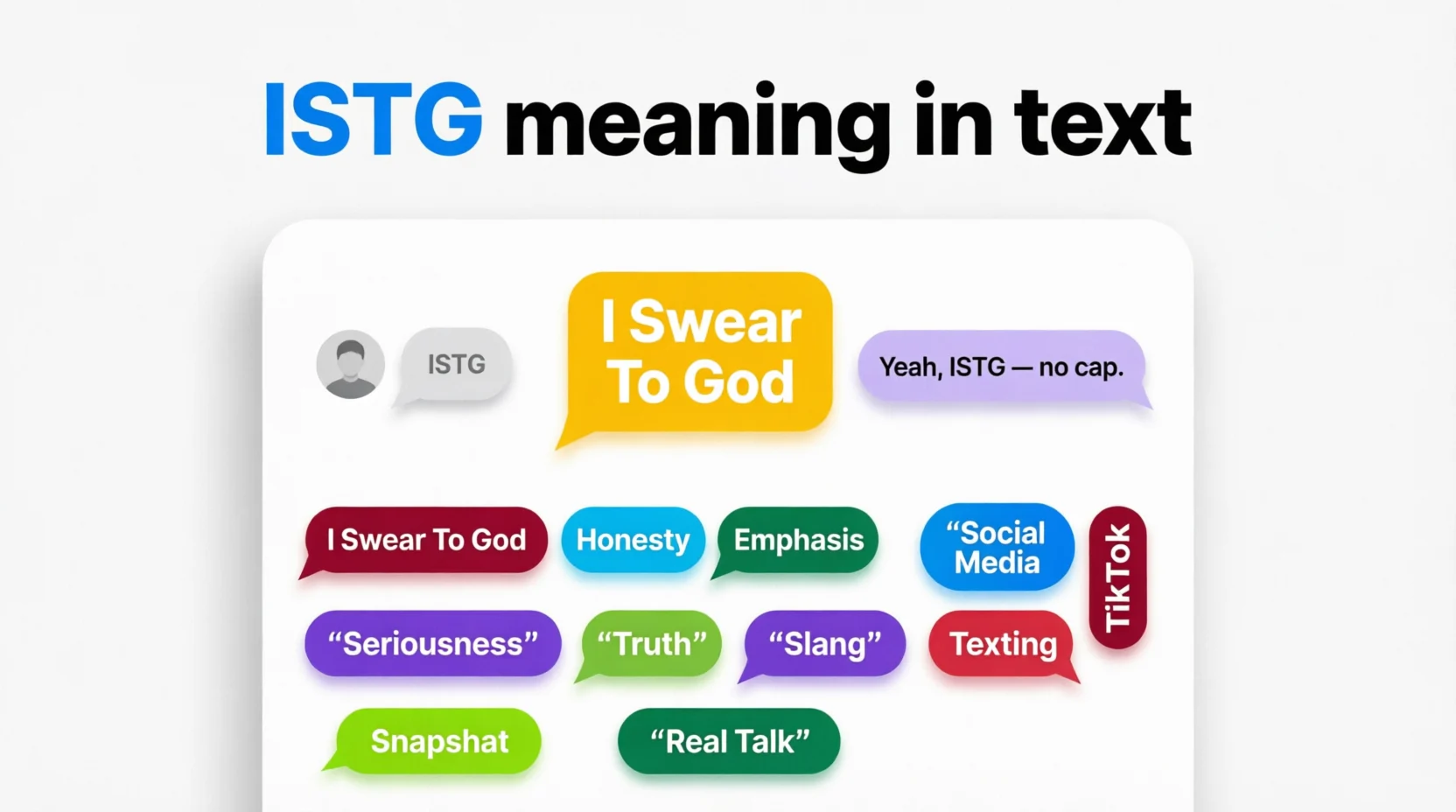
If you’ve been texting friends or scrolling through TikTok, Snapchat, or Instagram, you’ve probably seen someone type “ISTG” in the middle of a conversation. For people unfamiliar with internet slang, it can look confusing at first. But this popular abbreviation is actually very common in online chats and social media posts.
ISTG stands for “I Swear To God,” and people use it to express strong emotions like frustration, excitement, honesty, or surprise. In this article, you’ll learn the real meaning of ISTG in text, how it’s used on social media, and real examples that make the slang easy to understand.
What Does ISTG Mean?
ISTG is short for:
I Swear To God
It’s commonly used in texting and internet slang to emphasize that someone is being serious, truthful, annoyed, shocked, or emotional.
The phrase itself existed long before texting culture. People have said “I swear to God” in everyday speech for decades. The internet simply shortened it into a faster form.
Today, ISTG is especially common among younger users on:
- TikTok
- Snapchat
- Instagram DMs
- Discord
- X (Twitter)
- Online gaming chats
It’s usually typed in lowercase or uppercase:
- istg
- ISTG
Both mean the same thing.
How ISTG Is Used in Texting
The meaning of ISTG changes slightly depending on the mood of the conversation.
Sometimes it sounds funny. Other times it sounds angry or emotional.
Here are the most common ways people use it.
1. To Show Seriousness
People use ISTG when they want others to believe them.
Example:
- “ISTG I saw someone outside my window.”
This tells the other person:
“I’m serious. I’m not joking.”
2. To Express Frustration
ISTG is often used during annoyance or irritation.
Example:
- “ISTG this app crashes every day.”
Here, the phrase adds emotional emphasis.
3. To Make a Threat Sound Dramatic
Online, people sometimes use ISTG jokingly in fake dramatic threats.
Example:
- “ISTG if you spoil the ending I’ll block you.”
Usually, it’s not meant literally.
4. To React Emotionally
People also use ISTG when surprised, shocked, embarrassed, or excited.
Example:
- “ISTG that was the funniest thing ever.”
ISTG Meaning on Social Media
Social media changed the way people communicate. Short expressions now carry emotional meaning faster than full sentences.
ISTG became popular because it feels quick, emotional, and expressive.
On TikTok
On TikTok, ISTG often appears in captions or comments.
Examples:
- “ISTG this trend is everywhere”
- “ISTG I can’t stop watching these videos”
- “ISTG that ending destroyed me emotionally”
TikTok users often use it dramatically for humor.
On Snapchat
On Snapchat, ISTG is usually more personal.
Friends may use it during casual chats:
- “ISTG I forgot the homework”
- “ISTG my parents almost caught me”
It creates a conversational tone.
On Instagram
Instagram users commonly use ISTG in memes, story replies, and comment sections.
Examples:
- “ISTG this outfit is perfect”
- “ISTG y’all are too funny”
On Discord and Gaming Chats
Gamers use ISTG during intense moments.
Examples:
- “ISTG this lag is killing me”
- “ISTG our team never cooperates”
In gaming culture, it often expresses frustration quickly.
Is ISTG Rude?
Not usually.
But tone matters a lot.
ISTG itself is not considered offensive in most online conversations. However, it can sound aggressive depending on context.
For example:
- “ISTG stop messaging me”
This sounds angry.
Meanwhile:
- “ISTG you’re hilarious”
Sounds friendly and playful.
The phrase becomes rude only if the overall message is hostile.
Is ISTG Religious?
Technically, yes.
Because it includes the phrase “God,” some religious people avoid using it casually. In certain cultures or families, saying “I swear to God” is considered serious or disrespectful if used jokingly.
Online, though, many people use ISTG casually without religious intent.
Still, it’s smart to know your audience.
You may want to avoid using ISTG:
- In formal settings
- With religious elders
- At work
- In professional emails
- In academic writing
Examples of ISTG in Conversations
The easiest way to understand slang is by seeing it naturally in conversation.
Example 1: Serious Tone
Friend 1: “Did you actually meet the singer?”
Friend 2: “ISTG I did.”
Meaning:
They strongly promise they are telling the truth.
Example 2: Funny Frustration
Person: “ISTG my phone battery dies in five minutes.”
Meaning:
They’re exaggerating frustration humorously.
Example 3: Playful Threat
Friend: “I ate your snacks.”
You: “ISTG we are fighting now.”
Meaning:
Mostly playful, not serious.
Example 4: Emotional Reaction
Person: “ISTG that movie made me cry.”
Meaning:
The emotion felt genuine and intense.
Why People Use ISTG Instead of Full Sentences
Internet slang exists because people want communication to feel:
- Faster
- More emotional
- More casual
- More expressive
Typing “ISTG” is quicker than writing:
“I swear to God.”
But there’s another reason too.
Short slang creates a feeling of online identity and shared culture. It makes conversations feel modern and informal.
That’s why abbreviations like ISTG became popular alongside terms such as:
- LOL
- OMG
- TBH
- IMO
- FR
- SMH
These expressions help people communicate emotion instantly.
ISTG vs OMG
People sometimes confuse ISTG with OMG because both express emotion.
But they work differently.
ISTG
Means:
“I’m serious” or “I strongly feel this.”
Example:
- “ISTG that scared me.”
OMG
Means:
“Oh My God.”
Used for surprise or excitement.
Example:
- “OMG that scared me.”
So while both are emotional, ISTG usually sounds more intense or personal.
ISTG vs FR
Another similar slang term is “FR.”
FR means:
For Real
Example:
- “That movie was amazing fr.”
Both ISTG and FR emphasize honesty.
But ISTG usually carries stronger emotion.
Compare:
- “FR that hurt.”
- “ISTG that hurt.”
The second one feels more dramatic and emotional.
When You Should Avoid Using ISTG
Even though ISTG is common online, it does not fit every situation.
Avoid using it in:
Professional Emails
Bad example:
- “ISTG I completed the report.”
This looks unprofessional.
School Assignments
Academic writing should avoid internet slang.
Formal Conversations
Older audiences may not understand it or may view it negatively.
Sensitive Religious Settings
Some people dislike casual religious expressions.
Being aware of context matters.
Can Adults Use ISTG?
Yes.
Although younger users popularized it, many adults understand and use ISTG online.
Internet slang is no longer limited to teenagers. Social media culture spreads phrases across all age groups.
Still, younger audiences tend to use it more frequently and casually.
Is ISTG Always Typed in Caps?
No.
You’ll see both:
- ISTG
- istg
Lowercase usually feels softer and more casual.
Example:
- “istg this is adorable”
Uppercase often adds stronger emotion.
Example:
- “ISTG THIS IS INSANE”
Caps can make the message feel louder or more dramatic.
The Emotional Power Behind ISTG
One reason ISTG became so popular is emotional intensity.
Online conversations lack facial expressions and voice tone. People rely on slang to replace those missing emotions.
ISTG helps communicate:
- frustration
- sincerity
- excitement
- disbelief
- anger
- humor
In just four letters, people can instantly show emotional weight.
That’s why the phrase survived across multiple social media platforms.
Common ISTG Memes and Humor
Internet humor often exaggerates emotions, and ISTG fits perfectly into meme culture.
You’ll commonly see jokes like:
- “ISTG if my alarm rings tomorrow…”
- “ISTG I study better five minutes before exams”
- “ISTG my dog understands English”
These aren’t literal statements. They’re dramatic exaggerations designed to be relatable and funny.
That dramatic tone is part of what makes ISTG so popular online.
Does ISTG Mean Someone Is Angry?
Not always.
This is a common misunderstanding.
While ISTG can appear during arguments, it’s also used for:
- jokes
- excitement
- storytelling
- exaggeration
- emotional reactions
The surrounding message determines the mood.
For example:
Angry
- “ISTG leave me alone.”
Funny
- “ISTG this cat acts like a human.”
Same slang. Completely different tone.
Where Did ISTG Come From?
The exact origin is unclear, but ISTG became popular during the rise of texting culture and online chatrooms in the early internet era.
As smartphones and social apps grew, abbreviations became normal because users wanted faster communication.
Over time, slang communities on platforms like:
- Tumblr
- Twitter/X
- Snapchat
- TikTok
helped ISTG spread globally.
Today, it’s recognized across much of internet culture.
Other Slang Terms Similar to ISTG
If you’re learning online slang, you’ll probably encounter similar abbreviations too.
TBH
“To Be Honest”
NGL
“Not Gonna Lie”
SMH
“Shaking My Head”
FR
“For Real”
ONG
“On God”
Interestingly, “ONG” is sometimes used similarly to ISTG because both emphasize seriousness.
Example:
- “ONG that happened.”
However, ONG is more modern slang and especially popular among Gen Z users.
Should You Use ISTG?
You can — as long as the situation is casual.
It works best in:
- texting
- memes
- social media comments
- friendly chats
- gaming conversations
It’s less suitable for:
- business communication
- professional settings
- formal writing
Like most slang, context is everything.
Final Thoughts on ISTG Meaning
ISTG simply means:
“I Swear To God”
People use it online to express strong feelings, honesty, frustration, excitement, or dramatic emotion.
What makes ISTG popular is its emotional impact. It turns ordinary messages into something that feels more personal and expressive.
Whether someone is joking with friends, reacting to a viral TikTok, or complaining about school, ISTG helps add intensity quickly.
Now when you see:
- “ISTG this is hilarious”
- “ISTG I’m exhausted”
- “ISTG that actually happened”
—you’ll understand exactly what the person means and the emotion behind it.
descover more post
What Does ttys Meaning Mean in Text Real Meaning …
What Does FR Mean in Text Real Meaning Examples 2026
What Does CM Mean in Text Real Meaning Examples 2026

M. Kiro is a passionate writer who enjoys turning everyday questions into clear and meaningful answers. He focuses on creating helpful, honest, and easy-to-read content for people who just want simple explanations without confusion. His work reflects consistency, hard work, and a deep commitment to helping readers understand things better.